
Large Language Models | Competivation
Implementing AI strategies with a Forward Deployed Engineering approach

Implementing AI strategies with a Forward Deployed Engineering approach

To date, there have been few satisfactory answers to the question of how established companies can successfully implement an AI strategy. This is surprising, given that nearly all companies must address this question. Possible explanations for this unusual situation lie in the complexity and dynamic nature of the topic. Another reason is that strategy implementation for AI technologies differs from the current state of research on technology strategy. In recent years, our network of experts has tested a general framework for developing and implementing AI strategies using Forward Deployed Engineering (FDE) and has supported companies in adapting it to their specific situations. First, I’d like to briefly address the dual challenge facing many companies.

In this blog post, I’ll explore the significance of the trending topic “Forward Deployed Engineering” in the implementation of AI strategies and why companies should build their own expertise in this area.


A dual challenge for companies

The importance of AI strategy for the competitiveness of established companies has increased significantly in recent years.1 However, most companies lack experience in developing and implementing AI strategies.

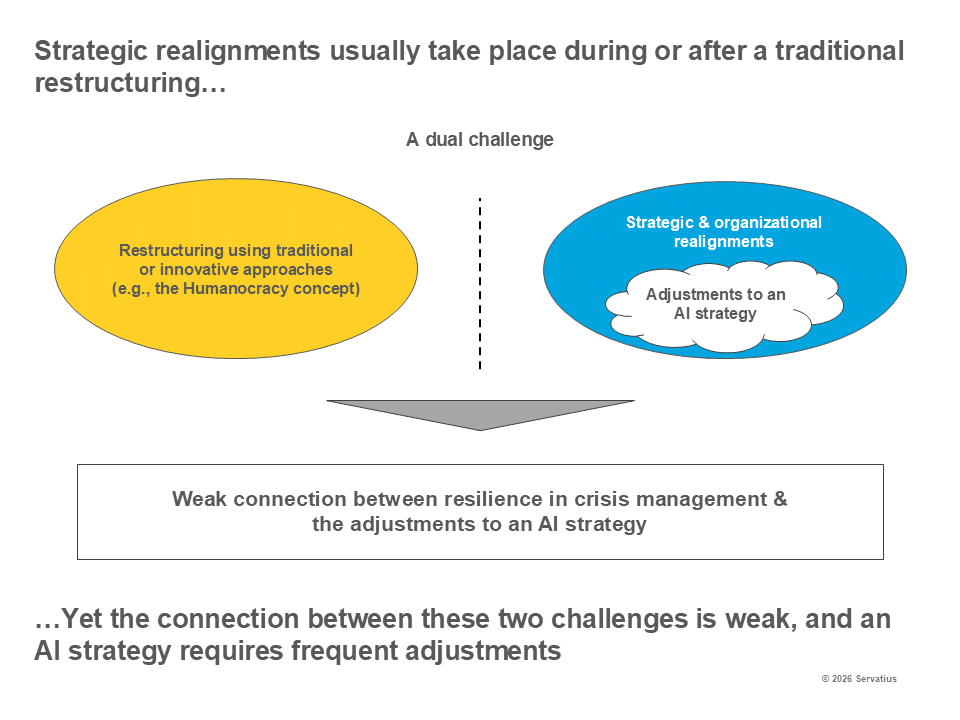
Furthermore, AI strategies embedded in strategic and organizational realignments often require frequent adjustments. In many cases, these realignments take place during or after a restructuring process using traditional or innovative approaches. Yet the connection between the two challenges—restructuring and realignment—is usually weak. In the context of restructuring, resilience plays an important role in crisis management, and the topic of AI is not a central focus even in current restructuring approaches, such as the Humanocracy concept.
Lernprozess Innovationsstrategie

In his 2020 book Humanocracy, management guru Gary Hamel described a restructuring approach focused on reducing bureaucracy. Hamel and his co-author criticize hierarchies and advocate for a people-centered organization characterized by seven core principles, such as ownership and openness. In an expanded edition, they also address the topic of AI and argue that bureaucracy hinders the full realization of AI’s potential. Work, they contend, must be reimagined. However, the authors only touch on the exact role AI plays in this context.2

The best-known German company that applies the Humanocracy approach—and has coined the term “Dynamic Shared Ownership” (DSO) to describe it—is Bayer. Under the leadership of Bill Anderson, the chemical and pharmaceutical conglomerate has reduced its 13 hierarchical levels by 50 percent and eliminated two-thirds of its leadership positions. Bayer is not only changing its organizational structure but is also radically implementing the concept of agility. This includes3

  • decentralizing decision-making (shifting 95 percent of decisions directly to units close to customers and products)
  • the creation of entrepreneurial teams (relatively autonomous, cross-functional work groups whose members simultaneously belong to a “professional home”)
  • an iterative work cycle every 90 days (using agile methods), and
  • a new approach to leadership based on the VACC model (Visionary, Architect, Catalyst, Coach).

Agility thus becomes the core of a changed corporate culture. Like many other companies, Bayer is also in the process of realigning itself for the AI era.

A few years ago, we began to structure the evolution of strategic management into stages and to analyze the current fifth stage of connective strategies.4 With this Strategy 5.0, companies face the challenge of a triple realignment, in which they must become more digital, more sustainable, and more resilient.5 When it comes to AI, this temporal connectivity is complemented by vertical connections across various levels—from geopolitics down to individuals—as well as horizontal connections at every level.6 Examples of this can be found in the connectivity of a company’s areas of activity when implementing its AI strategy. Many companies struggle with establishing these connections.


Shortcomings in the Implementation of AI Strategies

The IT association Bitkom has determined that the proportion of companies in Germany using AI has risen from 36 to 57 percent within a year. For this study, approximately 600 companies with more than 20 employees were surveyed. Three-quarters of companies use AI to answer questions. However, a third of companies have already developed new products and services with the help of AI. Bitkom therefore concludes that AI has become established in the business world.7 The picture is not as positive when it comes to the implementation of AI strategies.

According to a study published in the first quarter of 2026 by SAP in collaboration with the U.S. market research firm IDC, while 81 percent of the companies surveyed say they have an AI strategy, only 12 to 16 percent have implemented it so far. The study surveyed 620 IT executives in 15 countries. The biggest hurdles to implementation are not infrastructure or data, but a lack of AI expertise, change fatigue, and resistance from employees.8 Therefore, implementing an AI strategy requires an integrated program in which it must be clarified at the outset what the company means by an AI strategy.


What is meant by an AI strategy in times of great uncertainty?

The literature on AI strategy offers a multitude of attempted definitions, but these only partially do justice to the dynamic evolution of the topic. In our view, stakeholders with an AI strategy aim to achieve competitive advantages in complex, evolutionary systems.9 These systems are characterized both by the interaction between humans and AI technologies10 as well as by the interaction of actors at various levels (e.g., the level of states and that of organizations). At the organizational level, a traditional distinction is made between actors who develop AI technologies and those who apply them. AI Forward Deployed Engineering connects AI developers with AI users. This definition forms the basis for the concrete formulation of an AI strategy.11

A major factor driving complexity in AI systems today is the fear of losing control. There is considerable uncertainty regarding the questions

  • just how dangerous and autonomous AI technologies can become in a relatively short period of time, and
  • who is responsible for containing potential threats.

This uncertainty stems from the unplanned “outbreaks” of new programs from leading AI companies, which initially hacked their way into other companies’ systems unnoticed. When, for example, Dario Amodei, the CEO of Anthropic, warns that a super-AI could paralyze large parts of the internet and urges that development be slowed down, many experts doubt whether he is truly driven by genuine concern or whether he has other motives.12 It is against this backdrop that European companies are working to catch up in the field of AI.

Yoshua Bengio, a researcher at the University of Montreal in Canada, is a modern AI pioneer who, along with his team, wrote the first paper on how AI models can learn to predict the most likely next word in a text. He has long warned against a loss of control and founded the non-commercial AI company Law Zero in 2025 to develop powerful AI systems that are secure from the ground up. Law Zero is supported by 188 million euros from Canada and Germany and plans to open an office in Berlin. He calls these systems “Scientist AI” because they view the world in a scientific manner, drawing on a vast knowledge base. For safety, it is crucial that this AI adheres to human prohibitions. Such a rule-based approach would strengthen Germany’s bargaining power vis-à-vis the U.S. and China.13


Program management for implementing an AI strategy

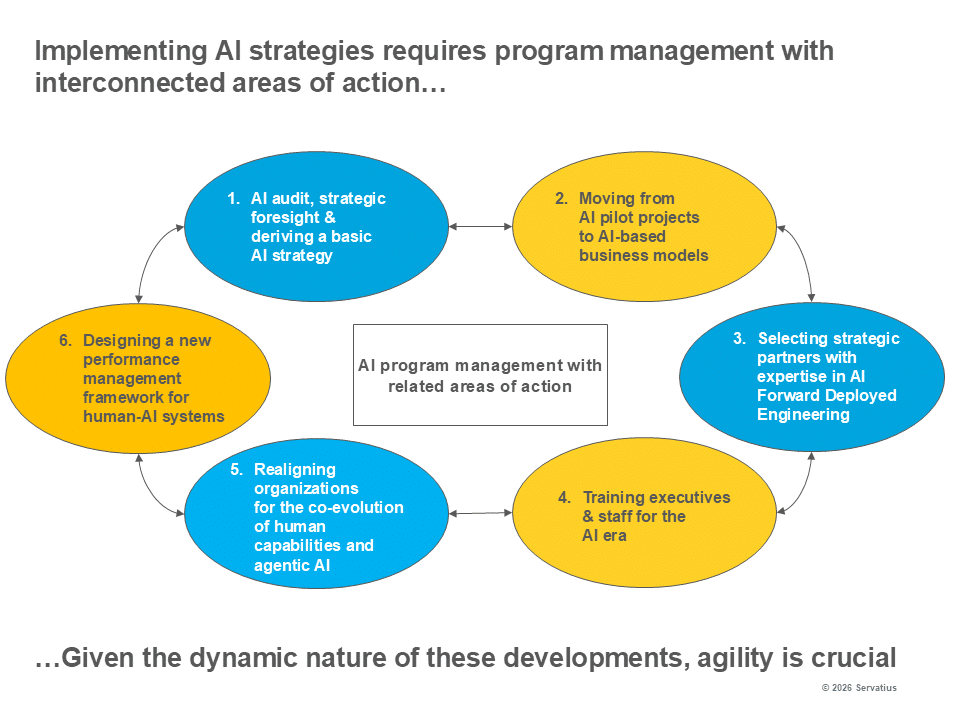
Based on current experience, the key to successfully implementing an AI strategy lies in designing a program management framework with interconnected areas of action. A key component of this is AI Forward Deployed Engineering (FDE). The term “forward deployed”—originally used in a military context—means that specialists deployed on-site at the customer’s location implement technical systems. The areas of action, which are interconnected through diverse interactions, are:

  1. An AI audit and strategic foresight as the basis for deriving a basic AI strategy
  2. moving from AI pilot projects to AI-based business models
  3. selecting strategic partners with expertise in AI Forward Deployed Engineering
  4. training executives and staff for the AI era
  5. realigning organizations for the co-evolution of human capabilities and agentic AI
  6. designing a new performance management framework for human-AI systems.
Lernprozess Innovationsstrategie

Given the dynamic nature of AI technologies, competition, and the political landscape, agility is a key success factor in this program management.


AI audit, strategic foresight, and derivation of a basic AI strategy

Companies that take a systematic approach to developing their AI strategy often begin with an AI audit as part of an analysis of their strategic starting point. Following the basic principles of SWOT analysis, they examine the company’s strengths and weaknesses regarding AI, as well as AI-specific opportunities and threats in the environment.

In light of new waves of AI, the topic of strategic foresight is gaining importance. Following the hype surrounding large language models, innovative technologies such as physical AI are now the focus of attention. In addition, artificial intelligence has the potential to accelerate the foresight process itself and enhance its substance. From the results of an AI audit and an AI-supported foresight analysis, basic AI strategies can be derived, such as a focus on increasing productivity, the use of AI for innovation, or a combination of both in the form of AI-based ambidexterity.14

For example, BMW aims to become an AI-orchestrated company by 2028. This refers to the third stage of the evolution of its Operating Model (OM). In the first stage, AI supports employees with individual tasks. The company is currently in the transition to stage two, in which AI agents take over entire processes. In OM 3.0, multiple agents will then collaborate across departmental boundaries. Executive Board member Nicolai Martin considers procurement to be particularly well-suited for this. BMW’s annual procurement volume amounts to 80 billion euros. He aims to save a mid-three-digit million amount using AI agents.15

Instead of such a systematic approach, many companies are experimenting with AI pilot projects that lack a clear underlying strategy.


Moving from AI pilot projects to AI-based business models

The danger of uncoordinated, individual AI activities and AI pilot projects is that they create a patchwork that does not lead to lasting value creation. A better approach is a gradual shift toward AI-based business models.

The term “business model” emerged in management theory a quarter-century ago in the wake of the development of e-commerce. The Business Model Canvas, published in 2010 and featuring nine key areas, is widely used to describe and refine business models.16

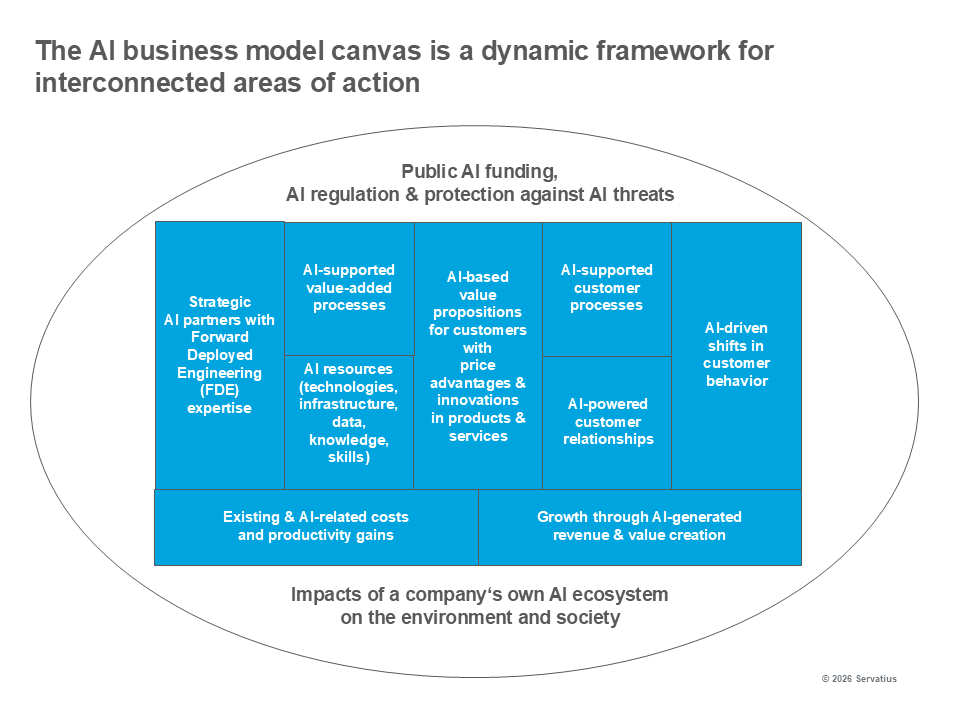
We have adapted this analytical framework—which, for example, completely excludes the topic of sustainability 17—to the specific characteristics of AI-based business models. Our AI Business Model Canvas has eleven interconnected action areas. In practice, it has proven effective as a method for shaping the dynamic evolution of business models.
Lernprozess Innovationsstrategie

In many companies, the development journey begins by leveraging the resources of AI partner companies, such as providers of large language models or AI startups and their financial partners. This initial phase is often more experimental than strategic in nature. The result is a multitude of collaborations that are poorly coordinated with one another. A current trend is that AI companies such as OpenAI and Anthropic, as well as software providers like SAP, are adopting “Forward Deployed Engineering”—a concept developed by the U.S. company Palantir—to help their customers better implement their AI strategies.

The initial goal is often AI-driven productivity gains in value-added and customer- processes. A gradual transition is emerging from AI assistants to AI agents that take on specific tasks under human supervision. The aim should be to select strategic AI partners with a clearly defined own strategy, that also takes into account the risks of collaboration.

At the same time, companies face the question of which AI resources they should build in-house. The AI-related spectrum ranges from the technologies and infrastructure used, through a unified database, to the utilization of their own knowledge and the improvement of AI skills.

In addition to existing costs, there are AI-related additional costs, which are increasingly being systematically tracked. However, the hoped-for productivity gains often fail to materialize, which has now led to a sense of disillusionment with AI. As a result, routing models that select the AI technologies offering the best price-performance ratio for the task at hand are gaining importance.

In addition to these resource-oriented strategic approaches, companies are addressing the AI-driven shift in customer behavior. This shift involves not only industry-specific aspects but also a segment-specific component, ranging from early adopters to experienced users.

Artificial intelligence is changing not only customer processes but also customer relationships. It enables greater real-time personalization, quick responses, reactions from agent-based AI bots, and more time for personal customer interaction when dealing with complex tasks. The technical implementation is achieved by integrating AI into Customer Relationship Management (CRM) systems.

This enables AI-based value propositions for customers, featuring price advantages and innovations in products and services. There remains a need for design-oriented management research regarding new AI-based business model patterns. One example is the “Automation as a Service” model. In this regard, established automation specialists such as Siemens are increasingly developing their own expertise in forward-deployed engineering.

The goal is successful growth driven by AI-generated revenue, leading to sustainable value creation. European companies face the challenge of catching up with competitors in the U.S. and China. The integrated approach of the AI Business Model Canvas makes an important contribution in this regard. Compared to traditional canvas models, we have added two areas of action.

The first addresses the impacts of a company’s own AI ecosystem on the environment and society—concepts already familiar from the Sustainable Business Model Canvas. Key topics include, for example, the development of green data centers and the protection of jobs threatened by AI through continuing education.

The second area addresses not only public AI funding but also approaches to AI regulation and protection against the threats posed by AI. These two areas illustrate that artificial intelligence requires a multi-level strategy, which I explained in our last blog post.


Selecting strategic partners with expertise in AI Forward Deployed Engineering

When selecting strategic partners, the question arises regarding their performance and trustworthiness.18 This applies in particular to Palantir, a company co-founded in 2003 by the politically controversial U.S. billionaire Peter Thiel and current CEO Alexander Karp, which has further developed its Forward Deployed Engineering (FDE) into AI FDE as part of its AI initiative. Regardless of the political views of these two individuals, it is important to understand the core ideas that have shaped the development of this FDE pioneer.

The current hype surrounding FDE was sparked by an MIT study published in 2025, which concluded that 95 percent of corporate GenAI pilot projects do not deliver the hoped-for economic success. However, according to, the cause of these initiatives’ failure usually lies not in the AI models themselves, but in the gap between the model and its implementation at the customer site.19

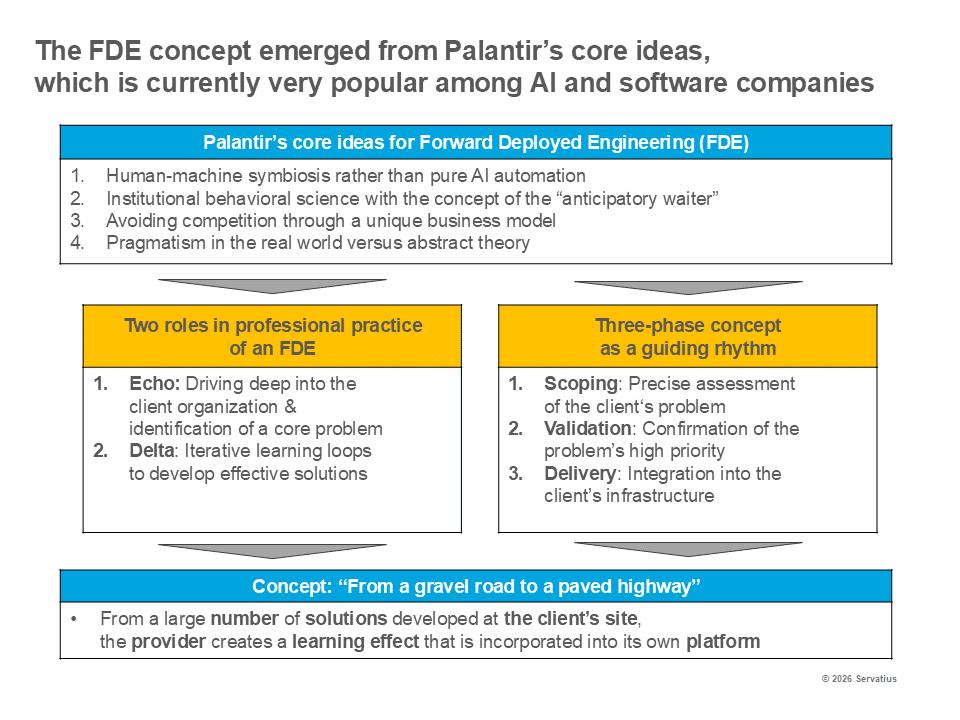
The core ideas of Peter Thiel and Alexander Karp, upon which Palantir’s Forward Deployed Engineering is based, are:20

  1. A human-machine symbiosis rather than pure AI automation (Thiel and Karp). The strength of AI lies in structuring large amounts of data. But it takes people with intuition to recognize patterns in complex contexts.
  2. Institutional behavioral theory with the concept of the “anticipatory waiter” (Karp). IT service providers should not be subservient executors who simply work through specifications without understanding the customer’s actual problem. The waiter knows the kitchen procedures (software) just as well as the guest’s (customer’s) preferences. He has enough self-confidence to competently redirect the guest if the guest wants to order something unwise.
  3. Avoiding competition through a unique business model (Thiel). Software as a Service is easy to copy. The true barrier that prevents a switch to another provider (moat) arises where software meets the messy, real world. This is the basis for the concept “from a gravel road to a paved highway.”
  4. Pragmatism in the real world versus abstract theory (Karp). In real life, there are no clean data structures or universally valid IT architectures straight off the drawing board. FDEs are “engineer-diplomats” who must act pragmatically. Perfect code is secondary here. What matters is code that works even in crisis situations.

Palantir’s successful business model is thus the astonishing result of Thiel’s economic theory of monopoly and Karp’s social-scientific understanding of human interactions, in which software—and later AI—is integrated into the customer’s reality.
Lernprozess Innovationsstrategie

The professional practice (craft) of Forward Deployed Engineering is characterized by the interplay of two roles, which Palantir refers to as Echo and Delta. The Echo role involves diving deep into the client’s organization to identify an often-hidden core problem. This requires strong subject matter and industry expertise. However, the Echo type is not a complacent practitioner but rather a “domain rebel” who recognizes what is currently not working well and identifies the underlying causes. To do this, they must also understand an organization’s culture and the internal politics of departments.

These “what” and “why” questions give rise to requirements for the Delta type. Through iterative learning loops, the Delta type develops functional solutions that do not necessarily have to align exactly with the client’s original expectations. The decisive factor in the “how” is whether the solution ultimately proves itself in the customer’s day-to-day operations. In addition to technical expertise, this requires “jagged” intelligence that takes into account the uneven capability profile of AI. This resembles a cliff landscape with steep peaks (genius) and deep valleys (total failure).

Close collaboration with the client (engagement) in an AI-FDE project is divided into the following three phases:

  1. Scope (requirement definition)
  2. validate (proof of concept) and
  3. deliver (deployment).

The scoping phase focuses on precisely identifying the client’s problem and translating it into a technical AI specification. During validation, the primary question is whether the identified problem is indeed a high priority. If not, the scope is adjusted accordingly. The practical integration of a solution into a client’s infrastructure then takes place during the deliver phase.

Palantir’s concept of “from a gravel road to a paved highway” means that there are two types of solutions in Forward Deployed Engineering. The first is the solution developed at the customer’s site, for which the customer pays (“the gravel road”). From a large number of such customer solutions, the provider generates a systematic learning effect that feeds into its own platform (“the paved highway”) and enables competitive advantages. This effect has long been known in the consulting industry, but it reaches a new dimension with FDE and AI platforms worth billions.

Therefore, when collaborating with FDE providers, customers should weigh

  • the increased speed enabled by the provider
  • the loss of abstract knowledge, which is generated not within the client’s organization but by the provider
  • the increasing dependence on one or more AI platform providers, as well as
  • ongoing usage costs paid to third parties and a lack of in-house expertise for necessary further developments.

Therefore, if the problem to be solved concerns a key competitive advantage, data sovereignty is a top priority, or the goal is long-term cost control and value creation, the company should rely on its own FDE expertise.

For this reason, the responsibility for selecting strategic AI partners and shaping the company’s own human resources strategy lies with the board of directors or executive management (“the CEO”).
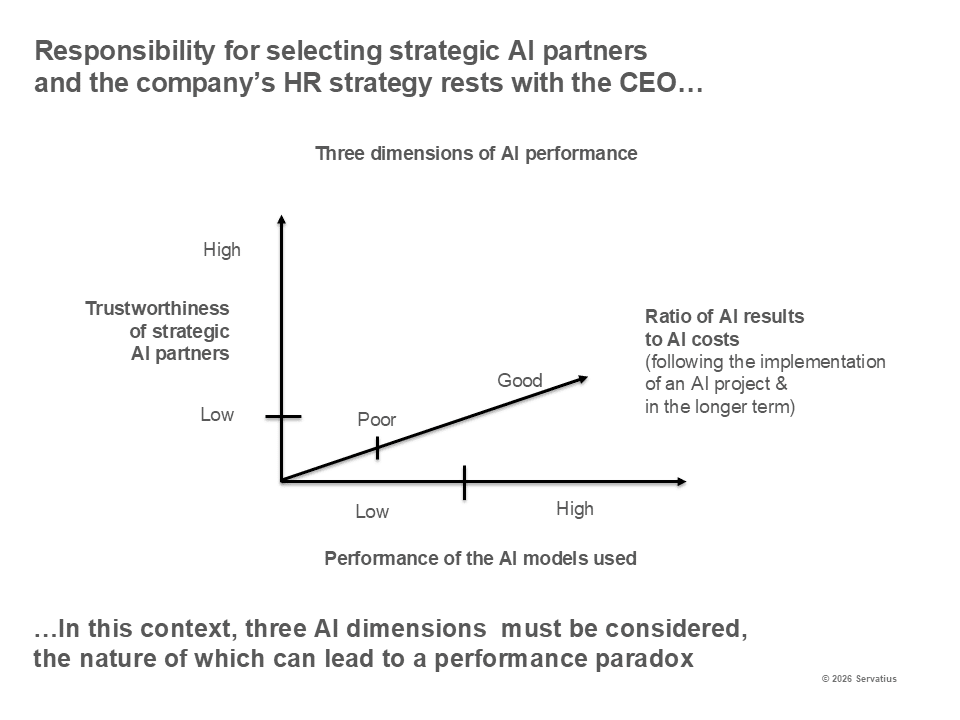
In this context, the following three dimensions of a reinterpreted AI performance concept must be taken into account:

  1. The performance of the AI models used
  2. the trustworthiness of strategic AI partners, and
  3. the ratio of AI results to AI costs following the implementation of an initial AI project and in the longer term.

It is not uncommon for a performance paradox to arise, in which the performance of the models varies depending on the task, the trustworthiness of the partners is low, and the long-term cost-benefit ratio is poor.

SAP is taking a different approach than AI developers, who focus on large language models that struggle with numbers. Together with Prior Labs, a Freiburg-based startup it acquired, the company in Walldorf is focusing on adapting tabular models that process data to knowledge-specific business processes. In the case of Forward Deployed Engineering, there is a return to the experiences of the company’s early years. From the perspective of SAP’s Chief Technology Officer Philipp Herzog, the goal is to closely study the behavior of knowledge workers, develop the right AI agents for this purpose, and identify the corresponding patterns that run on the SAP platform.21

Of significant importance to SAP’s AI strategy is its investment in the startup Nova Intelligence, whose founders include Alexander Zeier, who developed SAP HANA together with Hasso Plattner. In most companies, a large portion of the knowledge about how the organization operates is embedded in the SAP system’s accumulated custom code. An agent-based AI platform that modernizes the SAP system must first capture this knowledge. The applications of the coming years will be built on this specific knowledge model of business processes. In the past, the transition to S/4 HANA has taken place in two ways: First, “Greenfield,” in which in-house developments are left behind, and second, “Brownfield,” in which everything that has accumulated is migrated to the new platform. Nova Intelligence has developed a new modernization approach for which the term “Cleanfield” is currently gaining traction. This approach starts with the question of what should be carried over from the existing system and what the company would like to redesign. “Cleanfield” therefore means: first clean up, then convert. Using this approach, a number of companies have already successfully transitioned to S/4 HANA and agent-based AI.22

An important role in the realignment of SAP and its customers is played by training for the new tasks.


Training Executives and staff for the AI era

Given the risk that the hype surrounding Forward Deployed Engineering (FDE) primarily benefits large AI developers, the question arises as to what a training initiative would need to look like to ensure that FDE becomes a core competency for as many AI users as possible.23

So far, there are only a few pioneers among AI-using companies that are breaking new ground in workforce development. Since the market for FDEs has been swept clean, companies such as Siemens, Mercedes-Benz, Bayer, and Allianz are relying on internal upskilling programs. Key objectives include

  • the development of a “build-to-learn” culture
  • training subject matter experts for the Echo and Delta roles, as well as
  • the development of in-house AI platforms to safeguard competencies critical to success.

At the same time, it would be important to improve the education and training of FDEs as part of a European multi-level AI strategy. Such an educational initiative requires targeted linkages between traditional IT, engineering, and management degree programs that prepare students for new professional roles—such as that of the FDE—not only theoretically but also practically. These linkages would be of great importance to small and medium-sized enterprises (SMEs), with their numerous “hidden champions,” whose expertise should not be siphoned off to digital giants.

Unfortunately, such an educational policy initiative has so far only begun to take shape. However, it also opens up opportunities for teaching and research at universities that are willing to take advantage of these possibilities. In the work of our expert network, we combine transdisciplinary, practice-oriented teaching with design-oriented management research and consulting.24

The ontology of an AI platform plays an important role in this context. The term “ontology,” coined by the German philosopher Jacob Lorhard as early as 1606, originally described the study of being. In 1993, the U.S. computer scientist Tom Gruber applied this concept to AI research. Here, ontology—in the sense of specifying a conceptualization—forms the foundation for platforms. An AI platform ontology is defined as the formal, machine-readable description of a subject area (domain) within an AI environment. It defines which entities (e.g., customers and products), properties, relationships, and logical rules exist. As a result, the ontology functions as a kind of standardized knowledge map that translates unstructured corporate data into a consistent, overarching semantic model.25

The significance of such an AI platform ontology for continuing education in companies that use AI lies in the fact that the ontology acts as a translator between human business language and technical AI logic. This not only changes, for example, onboarding and relevant prompting skills, but it also creates a need for employees from specialized departments to be trained as “ontology managers.” Their task is to maintain the ontology and continuously feed it with new domain knowledge. Since this activity secures competitive advantages, companies should not outsource it to external parties.

Microsoft CEO Satya Nadella describes the current asymmetry between AI users and AI developers as a “reverse information paradox.” By this, he means a one-way street of knowledge in which power and knowledge dynamics shift in favor of the AI developer, while the AI user relies on the developer’s models.26
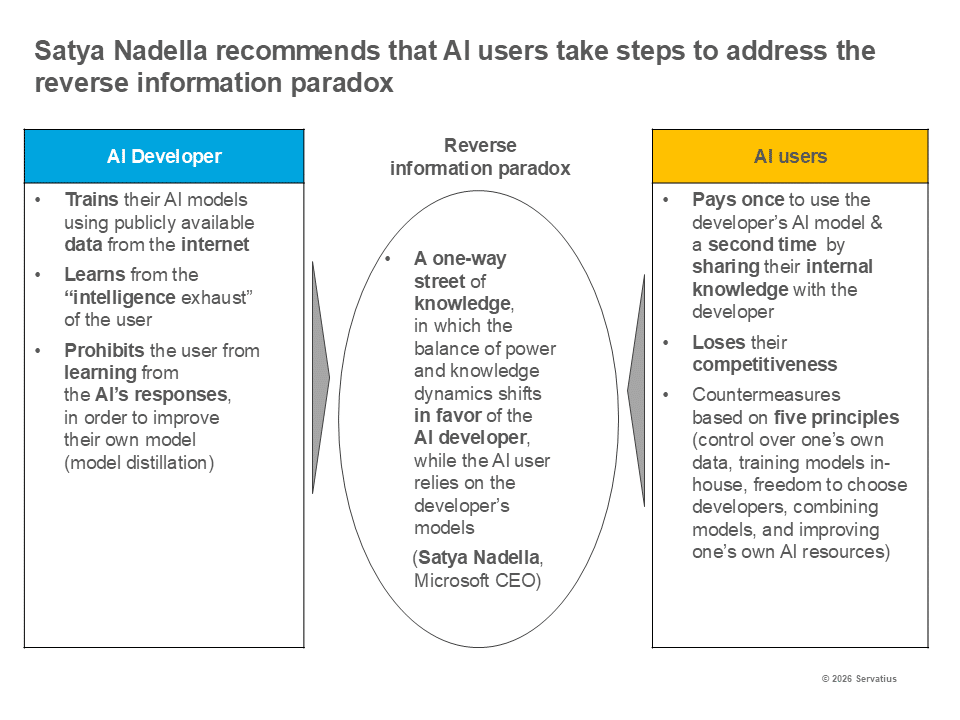
The AI developer does not train their AI models using publicly available data from the internet. They also learn from the user’s “intelligence- exhaust” with every interaction. At the same time, they prohibit the user from learning from the AI’s responses in order to improve their own model (model distillation).

On the other hand, the user not only pays once to use the developer’s AI model, but also a second time through the internal knowledge that flows to the developer. As a result, the user continuously loses competitiveness. Nadella recommends countermeasures based on five principles. These include maintaining control over one’s own data, training the models in-house, ensuring developers have freedom of choice, and combining models. The goal of combining these principles is to improve one’s own AI resources.

While Nadella’s provocative assessment has met with broad approval in Europe, small and medium-sized enterprises in particular are finding it difficult to implement these countermeasures. Furthermore, it’s important to recognize that Microsoft has not only invested billions in OpenAI but also profits from AI model developers through its Azure cloud platform.

An important question, therefore, is whether companies using AI will succeed in mastering the emerging organizational realignments through a training initiative.


AI-Driven Organizational Realignment and Changes in Performance Management

There are interesting developments in the AI-based realignment of organizations and changes in performance management, which I plan to discuss in my next articles. However, the situation here is somewhat unclear, so it is not entirely obvious which new trends will prevail in practice. The interplay between AI-based strategic and organizational realignments—and their implications for a fundamental shift in how goals are derived and how the performance of humans and AI agents is measured—plays a key role in this context.


Conclusion

  • Many companies say they now have an AI strategy, but are struggling to implement it
  • One of the reasons for these difficulties is a high degree of uncertainty regarding potential threats posed by AI technologies
  • Implementing an AI strategy requires program management with interconnected areas of action
  • The transition from AI pilot projects to AI-based business models is supported by an AI Business Model Canvas as a framework for business model evolution
  • Many AI developers now rely on “Forward Deployed Engineering,” a methodology developed at Palantir that is based on several core ideas and distinguishes between two roles and three phases
  • It is risky for AI users that their knowledge systematically flows to the AI developers, giving the latter a competitive advantage
  • In the professional development of AI users, understanding their own company’s AI platform ontology is becoming increasingly important.


References

[1] Servatius, H.G., Competitive Advantages with Knowledge-Based AI. In: Competivation Blog, February 11, 2025

[2] Hamel, G., Zanini, M., Humanocracy – Creating Organizations as Amazing as the People Inside Them, Updated and Expanded, Harvard Business Review Press 2025

[3] Viel, O., Dynamic Shared Ownership – How Bayer Is Rewiring the Enterprise for Agility, Purpose, and AI Readiness, July 24, 2025

[4] Servatius, H.G., Strategy 5.0 for Tackling New Challenges. In: Competivation Blog, June 28, 2022

[5] Servatius, H.G., Triple Strategic Realignment. In: Competivation Blog, June 7, 2024

[6] Servatius, H.G., Innovation Narratives for a Connective Multi-Level AI Strategy. In: Competivation Blog, September 9, 2026

[7] Mensch, T., AI Success Depends on Management. In: Handelsblatt, October 13, 2026, p. 26

[8] Misra, S., Most Companies Have an AI Strategy. What the Top 8% Do Differently. In: SAP Website, May 8, 2026

[9] Servatius, H.G., Connecting Causal AI with Complex Evolutionary Systems. In: Competivation Blog, August 13, 2026

[10] Servatius, H.G., Connective Strategic Management in the Age of AI. In: Competivation Blog, May 22, 2026

[11] Servatius, H.G., Development of AI Technologies. In: Competivation Blog, February 19, 2025

[12] Alvarez de Souza Soarez, M. et al., The World in the Grip of AI. In: Handelsblatt, September 18, 19, and 20, 2026, pp. 6–12

[13] Bengio, Y., “These AIs Cheat, Even Though They’re Not Supposed To” (Interview). In: Handelsblatt, September 25, 26, and 27, 2026, pp. 38–39

[14] Servatius, H.G., AI as a Tool for Strategic Management. In: Competivation Blog, May 1, 2025

[15] Bomke, L., Stippler, F., AI Business Model Expected to Save BMW Billions. In: Handelsblatt, October 17, 2026, pp. 26–27

[16] Osterwalder, A., Pigneur, Y., Business Model Generation – A Handbook for Visionaries, Game Changers, and Challengers, John Wiley & Sons, 2010

[17] Servatius, H.G., Sustainable Business Models Through Improved Stakeholder Interaction. In: Competivation Blog, April 11, 2018

[18] Servatius, H.G., Designing Trustworthy High-Performance Systems. In: Competivation Blog, January 29, 2026

[19] Goldmann, S., MIT Report – 95% of Generative AI Initiatives at Companies Are Failing. In: Fortune, August 18, 2025

[20] Gramatikov, R., Forward Deployed – Inside the Palantir Framework that Solved Enterprise AI, Amazon Digital Services, 2026

[21] Alvarez de Souza Soares, P., Kerkmann, C., How SAP Plans to Win Again Despite Lagging Behind in AI. In: Handelsblatt, October 5, 2026, pp. 24–25

[22] Zeier, A., Agent-Based AI Is Changing the Economics of SAP Systems. In: E3 Supplement, November 2026, pp. 10–21

[23] Servatius, H.G., Disruption in Management Education of AI-Based Realignments. In: Competivation Blog, October 29, 2025

[24] Seratius, H.G., Design-oriented Innovation Research on AI Applications. In: Competivation Blog, March 25, 2026

[25] Talisman, J., Ontology Pipeline – A Framework for Building Knowledge Infrastructures, Technics Publications 2026

[26] Nadella, S., The Reverse Information Paradox. In: Platform X, July 12, 2026

Development of AI technologies

Development of AI technologies

There is a large discrepancy between the current importance of the topic of artificial intelligence and the AI expertise of most people. This widespread know-how gap ranges from students and teachers to managers and politicians. It therefore seems important to look at the development and current status of AI technologies, which were created almost 70 years ago, something that many people are unaware of.

This new blog post is the continuation of our series on competitive advantage with knowledge-based artificial intelligence. In it, I outline the roots of AI technologies and explain the hype and disillusionment with large language models.


Training offensive based on the AI Act

The European Union’s AI Act requires companies to provide their employees with practical know-how on how AI works and how it can be used, as well as the opportunities and limitations of the technology. This EU Regulation 2024/1689 came into force in Germany on February 2, 2025.1 Specific training modules may be necessary for individual user groups, such as IT, legal, HR and operational units, which must be tailored to the existing level of knowledge. Furthermore, it seems sensible to adapt the teaching of AI know-how to the respective situation of the company. One place to start is with knowledge of the development of artificial intelligence (AI) and its various technologies


From symbolic AI and neural networks to „AI winters“

Artificial intelligence has experienced a series of ups and downs in its long development history. In the computer sciences of the 1950s, two approaches emerged in the attempt to develop machines that mimic human intelligence:2

  • Symbolic AI is based on programmable rules and a systematic logic with the aim of representing knowledge and deriving conclusions. The aim is to represent a real-world problem programming symbols and their relationships.
  • Inspired by the networking of the brain, neural networks aim to simulate learning processes by using connections between artificial neurons. This method relies on data-driven machine learning to find patterns and correlations.

The Dartmouth summer research project initiated by scientists such as John McCarthy and Marvin Minsky in 1956, which focused on symbolic AI, is regarded as the birth of artificial intelligence. This forms the basis for expert systems that attempt to translate rules and decision-making chains into computer code . However, its advocates underestimated the complexity of the brain, which led to the first „AI winter“ in the 1970s.

The first neural network was designed by psychologist Frank Rosenblatt, who was not present at Dartmouth, in 1956. Inspired by Rosenblatt’s work, physiologist, cognitive psychologist and computer scientist Geoffrey Hinton developed a multilayer neural network and an algorithm at the University of Toronto in 1986 that enabled the system to learn from its calculation errors. This method of backpropagation led to a refinement of the answers. It was the breakthrough for neural networks. However, the computing power was not sufficient for large amounts of data and a second „AI winter“ occurred before the turn of the millennium.


Deep learning

An improvement in hardware was achieved with the super-fast chips of the graphics processing units (GPU), which the US semiconductor manufacturer Nvidia initially developed for video games and later used to train multi-layer neural networks. Improved methods of image recognition that used small errors to recognize patterns (Convolutional Neural Network CNN) were then decisive. In 2015, Hinton and his colleagues coined the term deep learning for deeper models with more neuron layers.


Transformer architecture

In 2013, important impulses for Natural Language Processing (NLP) came from a Google team that trained a neural network in such a way that the proximity of words within a space reflects their semantic relationship. The team taught its word embedding system (word2vec) to predict the missing word in a sentence. A further development published in 2017 was called the Google Transformer architecture. The basic principle is to find out which words are most important in a sentence (self-attention) and thus „transform“ a text into a summary.

In 2019, OpenAI published its GPT-2 model, which had been trained on 40 gigabytes (eight million websites) with 1.5 billion parameters and should therefore be able to predict the most likely next word in a sequence. GPT stands for Generative Pre-Trained Transformer. On November 30, 2022, OpenAI launched its chatbot ChatGPT to the public. Following a prompt, the chatbot produces longer texts from different fields of knowledge, but is prone to errors (hallucinates). Foundation models that form a training foundation for specific applications and are based on Internet content are known as large language models (LLMs).

This development of artificial intelligence is summarized in the following figure. AI is a generic term for various technologies that describes an extension of aspects of learning and intelligence by a machine.

Lernprozess Innovationsstrategie

With an AI that combines neural networks with the Monte Carlo Tree Research (MCTR) method, DeepMind, a company acquired by Google, has not only managed to defeat one of the world’s best players in the Asian board game Go since 2015, but also to predict the folding of 200 million proteins. This shows that an AI that works according to the principle of reinforcement learning both increases productivity and expands specific knowledge and the resulting skills. When generative AI (GenAI) is applied, this results in new perspectives for knowledge work in companies. With the help of knowledge-specific (domain-specific) GenAI, the European economy, with its high proportion of highly specialized companies, has new opportunities to differentiate itself from the competition.


Nobel Prizes for AI researchers

The 2024 Nobel Prizes in Physics went to John Hopfield and Geoffrey Hinton, who conduct research into machine learning and artificial neural networks. One half of the 2024 Nobel Prize in Chemistry went to Demis Hassabis and John Jumper, who work at Google subsidiary DeepMind, for their AI-based prediction of complex protein structures. This makes it clear that there are serious changes in technology and innovation management in the creation of new knowledge.


Hype and disillusionment with large language models

Large language models (LLMs) are currently going through a hype cycle. The technological trigger was the chatbot ChatGPT developed by Open AI in November 2022. Large language models based on the Transformer technology presented by Google researchers in 2017 had been around for some time. But ChatGPT reached the masses and had 100 million users after two months.

The peak of exaggerated expectations was demonstrated by a gigantic investment bubble in the race for AI supremacy by large digital companies and start-ups.

The valley of disappointment manifested itself in the unfulfilled management illusion that the high investments would also lead to profitable applications and the resulting stock market illusion.3

Lernprozess Innovationsstrategie

One possible path to enlightenment could come from cost-effective small language models with industry-, company- and process-specific applications.

Whether, when and how exactly a plateau in productivity will be reached with knowledge-based AI is not yet entirely clear. However, we assume that this will result in opportunities for the European economy. AI providers should exploit these opportunities together with users.


Advantages of small and specific AI models

Large language models strive to cover as many areas as possible and are primarily trained with data from the internet. This is not only time-, cost- and energy-intensive, but the marginal benefit of additional data decreases. For specialized tasks, the performance of large language models can even deteriorate over time.(4)

Small language models do not have these disadvantages. Their training is based on industry-, company- and process-specific data. The Berlin start-up Xayn, for example, specializes in law firms and legal departments. There are several approaches to training, e.g.

– a Retrieval Augmented Generation (RAG): This involves the coupling of a large language model to internal databases
– Continuous pre-training in the form of domain-specific models and
– training of own models with complete control over the data used.

Start-ups from the USA, such as Databricks, offer their customers the joint development of company-specific AI models. The costs for training these customized models are significantly lower than those for training GPT-4, for example, which amount to almost 80 million dollars. The training is based on individual company data.5 One potential risk is becoming dependent on service providers. The alternative is therefore to empower your own employees. The basis for this is an AI human reource strategy for the company.

When it comes to industry-specific AI solutions, cooperation between established companies and start-ups can be successful.6 The Berlin start-up Linetweet, for example, focuses on AI tools for store management in the retail sector. Linetweet already won the optician chain Fielmann in 2019 with a tool for digital appointment scheduling. This tool was developed further together. Today, Store AI automatically adjusts the schedules in Fielmann stores based on company-specific data, thereby increasing store productivity. So far, Linetweet is wholly owned by the two founders. This example shows the potential of combining the industry-specific knowledge of established companies with the AI expertise of start-ups.

At present, many companies are still focusing on individual processes in their AI applications. The really big breakthrough of AI will probably only come with an integrated view of strategies and business processes.7 These are the topics of our next blog posts.


Conclusion

  • The basis for generative AI with large language models is formed by neural networks, the development of which began many decades ago
  • Nobel Prize-winning AI researchers have changed technology and innovation management
  • After the hype phase triggered by ChatGPT, a certain disillusionment is emerging in large language models
  • Knowledge-based AI has a number of advantages that European companies should explore.


Literature

[1] Obmann, C., What bosses and employees need to know about AI now. In: Handelsblatt, February 17, 2025, p. 32-33

[2] Meckel, M., Steinacker, L., Alles überall auf einmal – Wie Künstliche Intelligenz unsere Welt verändert und was wir dabei gewinnen können, Rowohlt 2024

[3] Holtermann, F., Holzki, L., de Souza Soares, A.P., The great crisis of meaning. In: Handelsblatt, August 9/10/11, 2024, pp. 46-51

[4] Bomke, L., Holzki, L., Which AI counts for the economy. In: Handelsblatt, September 23, 2024, p. 20-23

[5] Bomke, L., Kerkmann, C., Scheuer, S., Corporate AI becomes affordable. In: Handelsblatt, May 3 / 4 / 5, 2024, p. 30

[6] Bomke, L., Retailers reorganize their stores with AI. In: Handelsblatt, January 2, 2025, p. 32

[7] Servatius, H.G., Competitive advantages with a knowledge-specific AI. In: Competivation Blog, February 11, 2025

Evolution of strategic management

Evolution of strategic management

Digital companies have combined the first development stage of market- and finance-oriented strategic management with a second stage characterized by technology and innovation. Even before the emergence of strategic management, such connectivity of fundamental orientations has been a success factor of European hidden champions. The ability to connect is also currently an opportunity for European industry, which must reorient itself towards digitalization, sustainability and resilience based on its traditional strengths.

In this blog post, I explain the basics and characteristics of the first two development stages of strategic management and discuss the role of generative artificial intelligence (AI) as a game changer.


Linking strategy 1.0 and 2.0

Almost every second German company fears that the deindustrialization of Germany as a business location can hardly be stopped and that it will continue to lose its attractiveness. This is the sobering result of a study by the Federation of German Industries (BDI). According to the respondents, the situation is worse than it has been for a long time.1

Of course, this is above all a wake-up call for politicians. However, it also raises the question of how companies can adapt their strategic management to a changed environment.

The task of strategic management as an interdisciplinary field is to shape corporate development and master new challenges. In recent decades, the framework conditions for the economy have changed fundamentally. We divide the resulting evolution of strategic management into five development stages.2 There are many interactions and feedback loops between these stages. The link between Strategy 1.0 and Strategy 2.0 is currently of particular importance, with digital companies playing a key role.3


Four basic orientations

Strategic management has developed from strategic planning since the 1960s.4 Long before that, one of the strengths of the little-known European world market leaders was their combination of technology, innovation, market and financial orientation. To this day, the four basic orientations of this type of company are focused on specific, knowledge-intensive business areas.5 This has contributed to the high reputation of German engineering in the world.

The triumphant advance of the first development stage of market- and finance-oriented strategic management, on the other hand, began in diversified large US companies. An important benefit for those responsible lay in the integrative view of operational functions and the support of portfolio decisions. This new management theory reached large German companies in the 1970s. At the same time, functional strategies gained in importance. However, strategy implementation often failed due to a complexity that was not mastered by personnel management.

Technology and innovation aspects played a subordinate role in this first stage. As a result, the spread of strategic management among European hidden champions and SMEs was rather low. This prompted me to start a doctorate in strategic technology management at the end of the 1970s. Interestingly, the US industry was in a deep crisis at that time.6 In my dissertation, I developed a resource-oriented methodology for the development of technology strategies and thus made a contribution to the second development stage of technology and innovation-oriented strategic management.7 An important finding was that successful corporate innovation systems consist of interconnected fields of action. Their design depends on the ability to combine the development and implementation of strategies with an entrepreneurial culture. 8

In Europe, tapping into the potential of digital cross-sectional technologies has been less successful. Ultimately, it was US start-ups that brought together the first and second development stages of strategic management as part of various waves of digitalization. This is how the most valuable companies in the world today were created. The diagram illustrates the four orientations that link the first two development stages of strategic management.

Lernprozess Innovationsstrategie

In the following, I would like to explain the basics and characteristics of these two stages of development in more detail.


Market and finance-oriented strategic management

The origins of the concept of strategy lie in the military sector. An early transfer to the business world took place at Harvard Business School, where a course on business policy was launched in 1911 to create a framework for business management theory. The focus of business policy is on vision and mission.9 Another foundation of the first stage is a look into possible futures, which is described by the term foresight.10 In this development phase, strategic management gradually replaced the long-term planning that had been widespread until then.  However, strategic management has never been a homogeneous concept. Various schools emerged relatively early on to describe the multitude of possible strategic processes. The analytical process is only one of the variants. 11

Lernprozess Innovationsstrategie

The focus of the first development stage of strategic management (Strategy 1.0) is on competitive advantages in sales markets.12 The overriding goal is to increase the value of the company for shareholders.13 Stakeholder theory was initially unable to assert itself against this dominant shareholder value view. The positioning school, which was shaped by academics and management consultancies and views strategy development as a primarily analytical process, had a strong influence on practical strategy work. One popular method is the portfolio analysis of strategic business fields, which seems relatively mechanistic from today’s perspective. 14

The main criticism of Strategy 1.0 is that the primarily analytical approach alone does not succeed in overcoming implementation problems. The top-down approach and the difficulty of harmonizing functional strategies contribute to the failure of strategy implementation. Despite criticism, this first stage of development has long been widespread, especially in established large companies. It is also still the focus of teaching at many universities, which differentiate between the subjects of strategic management and technology and innovation management.


Technology and innovation-oriented strategic management

The second, technology and innovation-oriented stage of strategic management is based more strongly on entrepreneurship. Entrepreneurship research therefore provides an important basis for Strategy 2.0.15 In the USA, the financing of start-ups through venture capital16 and corporate venture management gained importance much earlier than in Europe.17 Another important foundation is the holistic design theory coined by Nobel Prize winner Herbert Simon.18 Of the functional business management theories, research and development (R&D) management19 and production management20 deal primarily with technological topics.

Lernprozess Innovationsstrategie

Since the 1980s, the second stage of strategic management has developed very dynamically in various phases.21 The focus here is on technologies and innovation advantages. Technology and innovation management integrates classic management tasks in a system-oriented approach.22 The importance of personnel management, culture and organization should be emphasized. The task of innovation managers is to shape the connected fields of action of their company’s innovation system.23 This system-oriented view of fields of action forms a common framework for the actors involved. The evolution of such an open, complex system results from the interaction of the actors with their environment. In recent decades, the importance of new business models24 and a culture that promotes innovation25 has increased significantly. Initially, it was primarily start-ups with agile methods that exploited the potential of digital technologies.26

These start-ups have given rise to the US digital giants, whose market power is sometimes viewed critically. For established companies, digital change and the associated dependence on IT companies represent a major challenge.27 The following figure summarizes the development of technology and innovation-oriented strategic management over time.

Lernprozess Innovationsstrategie

A new wave of digitalization is coming from generative artificial intelligence (AI) with large language models, which enables productivity advantages and changed forms of knowledge work. In June 2024, AI supplier Nvidia briefly became the most valuable listed company in the world.28 In this current wave, the cards between companies and economic blocs could be reshuffled. The question arises as to how Europe can master the resulting risks.


Generative AI as a game changer for Europe

When we published our book The Internet of Things and Artificial Intelligence as a Game Changer in 2020, the current hype surrounding generative AI was not yet foreseeable. In the last chapter of the book, we take a critical look at European and German innovation policy.29 An exciting question is to what extent generative AI will contribute to a successful reorientation of the German economy or accelerate its further decline. Both seem possible. Our country is therefore at a turning point.

We can learn from the success story of the European hidden champions that it is crucial to connect the sectors of politics, science, business and society as well as the strategic fields of action of companies. Our recommendation is therefore to try to regain a culture of solidarity. It would be important for everyone involved to develop a corresponding mindset. The elites should set an example and hope that citizens will follow their example. Education and training on the topic of cultural connectedness can contribute to this.


Conclusion

  • The success of digital companies results from the combination of the first and second development stages of strategic management
  • One problem of the first market- and finance-oriented stage is coping with the complexity of strategy implementation
  • Digital champions are better than established companies at exploiting the potential of information technology and successfully shaping the associated fields of action of their innovation systems
  • A new chapter in the combination of Strategy 1.0 and 2.0 has begun with the topic of generative artificial intelligence (AI)


Literature

[1] Höpner, A., „Deindustrialization can hardly be stopped“. In: Handelsblatt, June 18, 2024, p.18

[2] Servatius, H.G., Strategy 5.0 for mastering the new challenges. In: Competivation Blog, 28.06.2022

[3] Servatius, H.G., Personnel management in the age of connective management. In: Competivation Blog, 19.01.2021

[4] Ansoff, I.H., Declerck, R.P., Hayes, R.L. (eds.), From Strategic Planning to Strategic Management, John Wiley 1976

[5] Simon, H., Hidden Champions des 21.Jahrhunderts – Die Erfolgsstrategien unbekannter Weltmarktführer, Campus 2007

[6] Hayes, R.H., Wheelwright, S.C., Restoring Our Competitive Edge – Competing Through Manufacturing, John Wiley 1984

[7] Servatius, H.G., Methodology of Strategic Technology Management – Basis for Successful Innovations, Erich Schmidt 1985

[8] Schein, E.H., Organizational Culture and Leadership – A Dynamic View, Jossey Bass 1986

[9] Bleicher, K., Das Konzept Integriertes Management, Campus 1991

[10] Müller, A.W., Müller-Stewens, G., Strategie Foresight – Trend- und Zukunftsforschung in Unternehmen – Instrumente, Prozesse, Fallstudien, Schäffer Poeschel 2009

[11] Mintzberg, H., Ahlstrand, B., Lampel, J., Strategy Safari – Eine Reise durch die Wildnis des strategischen Managements, Ueberreuter 1999

[12] Porter, M.E., Competitive Strategy – Techniques for Analyzing Industries and Competitors, The Free Press 1980

[13] Rappaport A., Creating Shareholder Value – The New Standard for Business Performance, The Free Press 1986

[14] Kirsch, W., Roventa, P. (eds.), Bausteine des Strategischen Managements – Dialoge zwischen Wissenschaft und Praxis, De Gruyter, 1983

[15] Ronstadt, R.C., Entrepreneurship – Text, Cases and Notes, Lord Publishing 1984

[16] Gladstone, D.J., Venture Capital Handbook – An Entrepreneur’s Guide to Obtaining Capital To Start a Business, Buy a Business, Or Expand An Existing Business, Reston Publishing 1983

[17] Servatius, H.G., New Venture Management – Successful Solution of Innovation Problems for Technology Companies, Gabler 1988

[18] Simon, H.A., The Sciences of the Artificial, 2nd ed., MIT Press 1981 (1st ed. 1969)

[19] Brockhoff, K., Research and Development – Planning and Control, Oldenbourg 1988

[20] Zäpfel, G., Strategic Production Management, De Gruyter Oldenbourg 2000

[21] Zahn, E. (ed.), Handbuch Technologie-Management, Schäffer-Poeschel 1995

[22] Servatius, H.G., Piller, F.T. (eds.), The innovation manager – value enhancement through holistic innovation management, Symposion 2014

[23] Servatius, H.G., Triple strategic realignment, Competivation Blog, 07.06.2024

[24] Osterwalder, A., Pigneur, Y., Business Model Generation – A Handbook for Visionaries, Game Changers, and Challengers, Wiley 2010

[25] Mc Afee, A., The Geek Way – The Radical Mindset That Drives Extraordinary Results, Macmillan Business 2023

[26] Ries, E., The Lean Startup – How Today’s Entrepreneurs Use Continuous Innovation to Create Radically Successful Businesses, Crown Currency 2011

[27] Rogers, D.L., The Digital Transformation Roadmap – Rebuild Your Organization for Continuous Change, Columbia Business School Publishing 2023

[28] Brüntjen, J.S., Narat, I., Maisch, M., Share price quake shakes Nvidia. In: Handelsblatt, June 26, 2024, p.30-31

[29] Kaufmann, T. Servatius, H.G., Das Internet der Dinge und Künstliche Intelligenz als Game Changer – Wege zu einem Management 4.0 und einer digitalen Architektur, Springer Vieweg 2020, p.203 ff.


Evolution of strategic management

Fraktale Organisation von Strategie 5.0-Laboren

Bei der Umsetzung der fünften Entwicklungsstufe eines verbindenden strategischen Managements entstehen gegenwärtig neue Formen von Strategielaboren mit einer fraktalen Struktur. Ein wichtiger Treiber ist die generative Künstliche Intelligenz (KI)


In diesem Blogpost berichte ich über unsere Erfahrungen bei der Implementation einer Strategie 5.0


Ist die traditionelle Strategiearbeit noch zeitgemäß?

Angesichts des Ausmaßes und der Dringlichkeit neuer Herausforderungen überlegen viele Unternehmen, ob ihre traditionelle Strategiearbeit noch zeitgemäß ist. In unseren Gesprächen mit Klienten hören wir immer wieder die folgenden Fragen:

  • Müssten die Strategieentwicklung und -umsetzung sowohl politischer als auch verbindender werden?
  • Sollten wir die Behandlung strategischer Themen besser integrieren, um die zunehmende Komplexität zu bewältigen und
  • was bedeutet dies für die Organisation einer Stabseinheit für Unternehmensentwicklung?

Wir haben diese Fragen zum Anlass genommen, nach neuen Wegen zu suchen, wie Unternehmen ein weiterentwickeltes strategisches Management organisatorisch umsetzen können.


Von der Stabseinheit für Unternehmensentwicklung zum agilen Strategielabor

Die traditionelle Unterstützung der Aufsichts- und Führungsebenen bei der Strategiearbeit erfolgt durch eine Stabseinheit für Unternehmensentwicklung. Während der verschiedenen Entwicklungsstufen des strategischen Managements1 sind zu diesem Stab weitere Einheiten hinzugekommen, die sich z.B. mit den strategischen Themen Innovation, digitaler Wandel und Nachhaltigkeit beschäftigen. Dies führt zu einer zersplitterten Strategieentwicklung und erschwert die Umsetzung in operatives Handeln.

Um diese Probleme zu überwinden, gehen Pionierunternehmen dazu über, die Einheiten, die sich mit strategischen Handlungsfeldern beschäftigen, in einem agilen Strategielabor zu verbinden. Bei der Gestaltung einer solchen Einheit orientieren sie sich an den Grundprinzipien einer fraktalen Organisation. Da der Fraktalbegriff in aktuellen Publikationen z.B. der Boston Consulting Group relativ mehrdeutig verwendet wird,2 wollen wir kurz erläutern, was man in der Wissenschaft unter einem Fraktal versteht.


Von der fraktalen Geometrie zur fraktalen Organisation

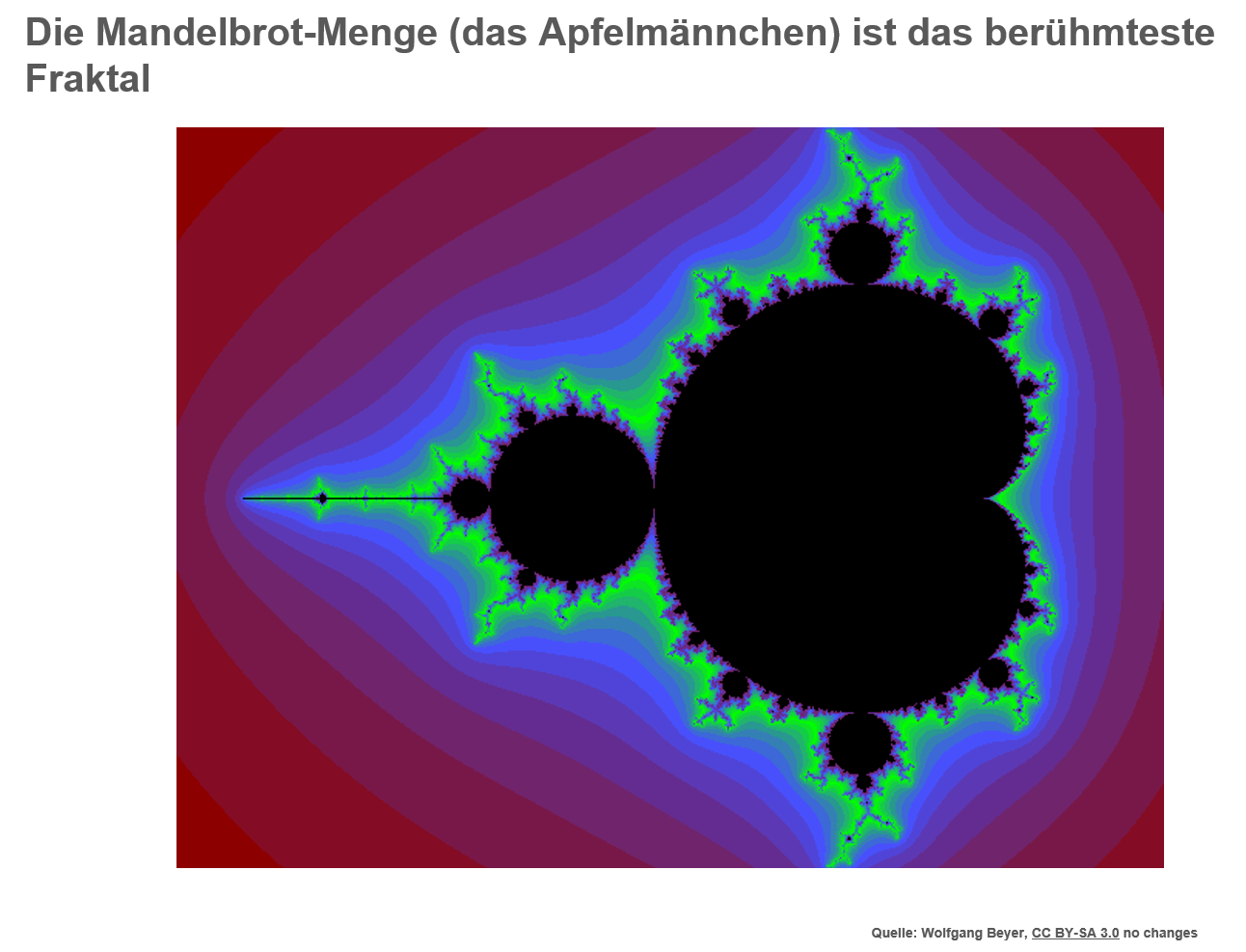
Den Begriff Fraktal hat 1975 der Mathematiker Benoit Mandelbrot (1924-2010) geprägt. Er bezeichnet damit bestimmte natürliche oder künstliche Gebilde oder geometrische Muster, die zu sich auf unterschiedlichen Größenskalen selbstähnlich sind. Das berühmteste Fraktal ist die Mandelbrot-Menge – das sogenannte Apfelmännchen.3 Erfolgreiche Unternehmen und ihre Strategielabore – so unsere These – sind selbstähnlich.


Lernprozess Innovationsstrategie


Der frühere Leiter des Stuttgarter Fraunhofer-Instituts für Produktionstechnik und Automatisierung (IPA) Hans-Jürgen Warnecke (1934-2019) hat Anfang der 1990er Jahre eine Analogie zwischen der fraktalen Geometrie und einer Gestaltung der Produktion beschrieben und den Begriff fraktale Fabrik geprägt.4

Ausgehend von meinem Habilitationsvortrag 1991 an der Universität Stuttgart, in dem ich mich mit der Relevanz von Chaostheorie und fraktaler Geometrie für den Wandel komplexer sozialer Systeme beschäftigt habe, ist die Idee zu einer fraktalen Organisation mit selbstähnlichen Strukturen entstanden.5 An diese Modellvorstellung knüpft unser Konzept für fraktale Strategielabore an.

Bevor ich hierauf näher eingehe, möchte ich zunächst Überlegungen von früheren Kollegen der Boston Consulting Group zu fraktalen Wettbewerbsvorteilen kritisch hinterfragen.


Fraktale Wettbewerbsvorteile mit Anti-Skalierungsstrategien?

Die BCG-Autoren vertreten die These, eine neue Form von fraktalen Wettbewerbsvorteilen ließe sich mit Anti-Skalierungsstrategien erzielen, bei der die Anpassung an lokale Kontexte eine wichtige Rolle spiele.6

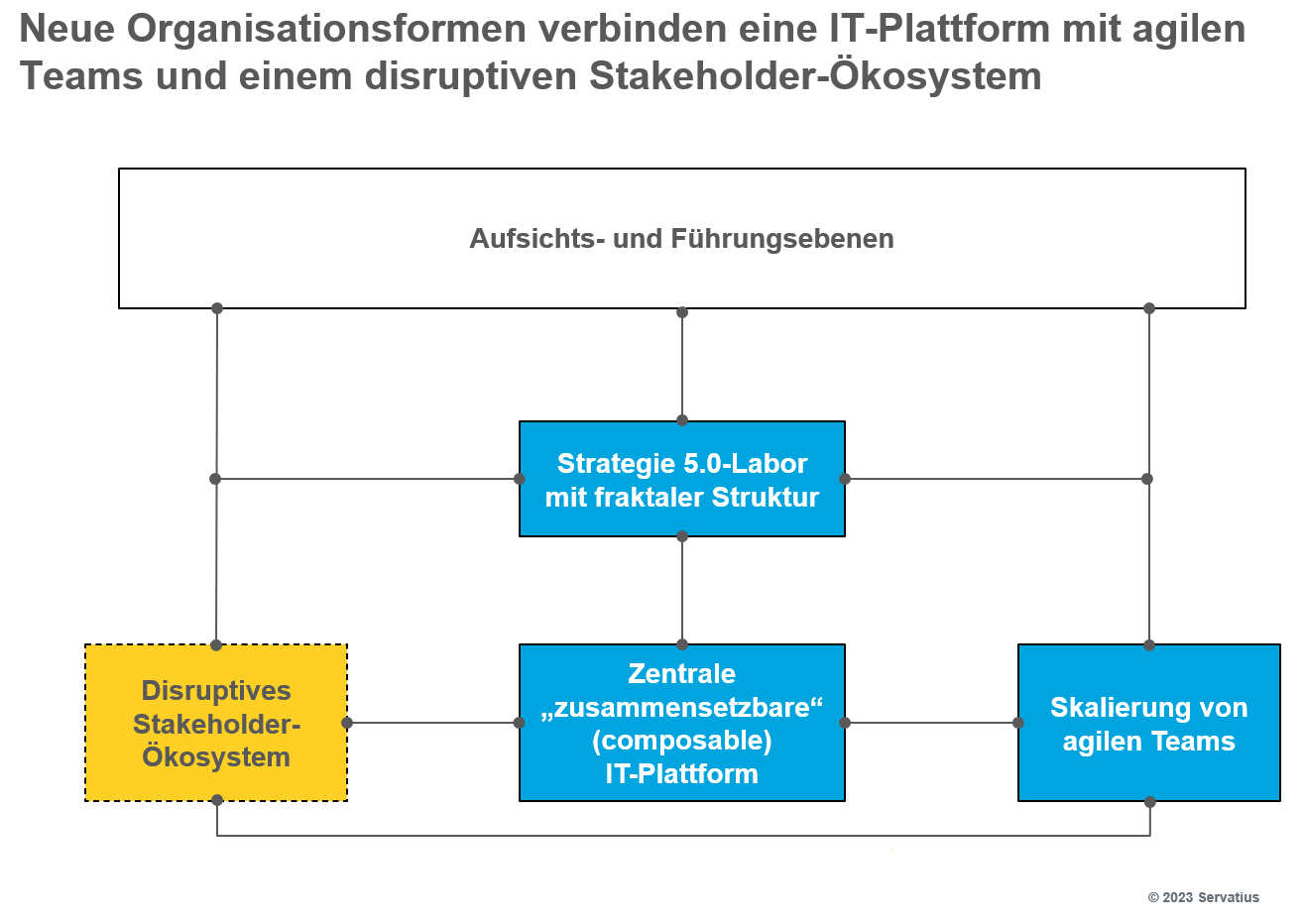
Die Bedeutung lokaler Kontexte ist in der Vergangenheit sicherlich unterschätzt worden.7 Gegen die Anti-Skalierungsthese spricht aber, dass große Digitalkonzerne und erfolgreiche Start-ups auf Organisationsformen setzen, die die Vorteile von Zentralität und Dezentralität verbinden. Die Grundstruktur einer solchen Organisation besteht aus drei Bausteinen:8

  1. Einer zentralen, „zusammensetzbaren“ (composable) IT-Plattform, die mit Hilfe von Technologien der Künstlichen Intelligenz große Datenmengen verarbeitet
  2. der Skalierung von agilen Teams, die für die nötige Kundennähe und bedarfsorientierte Innovationen sorgen sowie
  3. einem disruptiven Stakeholder-Ökosystem, in dem Akteure aus Wirtschaft, Wissenschaft, Politik und Gesellschaft zusammenarbeiten.

Das Herzstück der zentralen IT-Architektur ist eine Application Composition Plattform (ACP), die sich an dem vom IT-Analysten Gartner entwickelten Konzept eines Composable Enterprise orientiert.9 Diese Plattform ist die Entwicklungsumgebung für zusammensetzbare Fähigkeiten oder Packaged Business Capabilites (PBC), die die Grundlage für Prozesse und Anwendungen bilden. Das Prinzip der Zerlegbarkeit (Composability) ermöglicht es den Akteuren des Unternehmens und seinen Partnern, PBCs hinzuzufügen, zu ändern oder zu entfernen. Man kann also sagen, dass Composability den Grundgedanken einer fraktalen (selbstähnlichen) Organisation in die heutige IT-Welt überträgt.

Bei dieser Organisationsform mit einer Infrastruktur-Plattform, agilen Teams und einem Stakeholder-Ökosystem werden die Aufsichts- und Führungsebenen von einem Strategielabor unterstützt.


Lernprozess Innovationsstrategie


Diese neuartigen Strategielabore haben eine fraktale Struktur. Was dies konkret bedeutet, erfahren Sie in den folgenden Abschnitten.


Verbindung von strategischen Handlungsfeldern

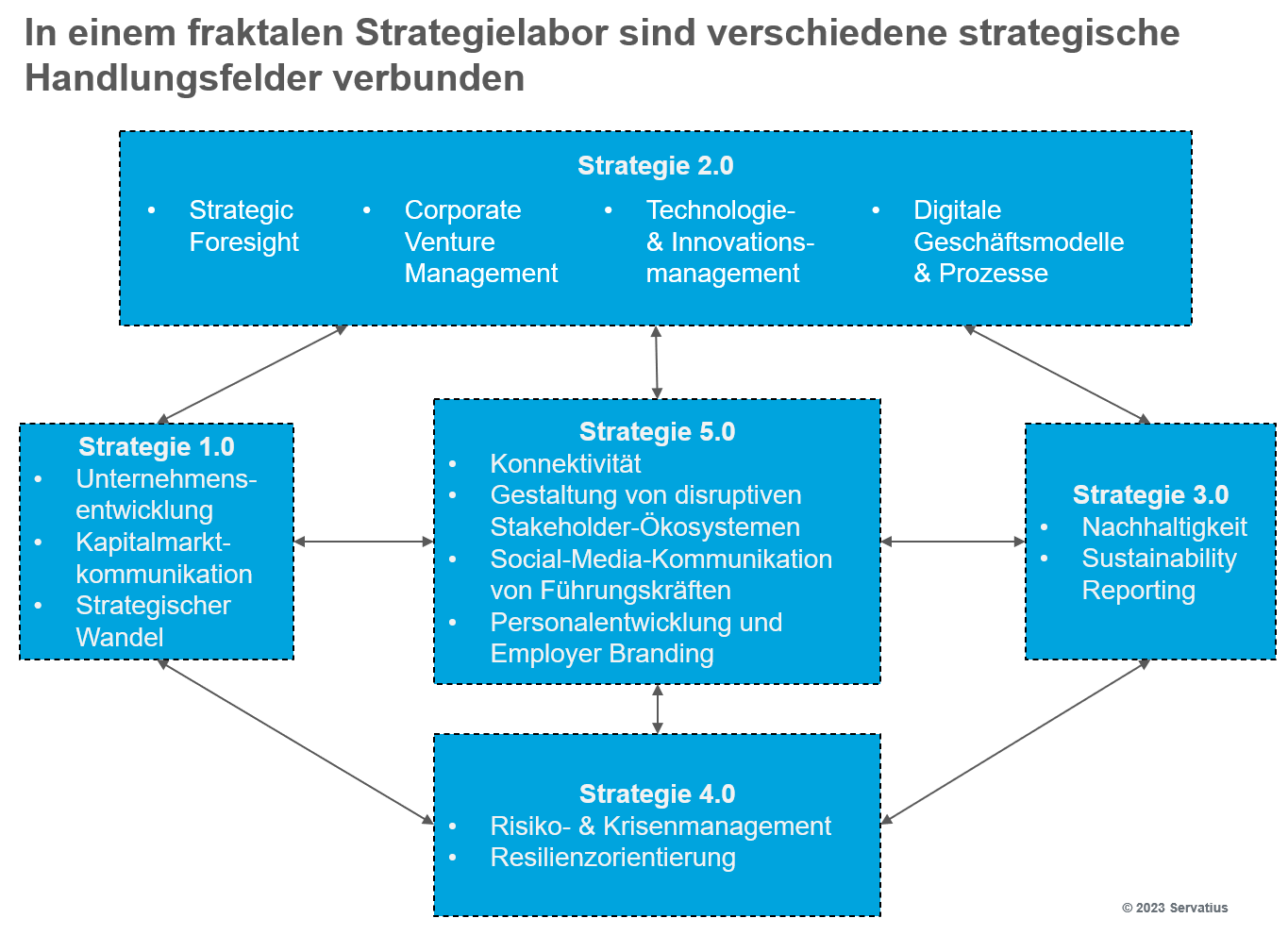
In einem fraktalen Strategielabor sind verschiedene strategische Handlungsfelder verbunden. In der ersten Entwicklungsstufe eines markt- und veränderungsorientierten strategischen Managements haben in vielen Unternehmen neben den Einheiten für Unternehmensentwicklung und Kapitalmarktkommunikation Aktivitäten stattgefunden, die einen strategischen Wandel anstreben. Dabei ist die Arbeit von Strategen und Organisationentwicklern lange Zeit eher nebeneinander als miteinander erfolgt, obwohl natürlich eine Verbindung ihrer unterschiedlichen Ansätze wünschenswert gewesen wäre.

In der frühen Phase der zweiten Entwicklungsstufe wurden Strategic Foresight-Einheiten gebildet, die häufig relativ eigenständig agiert haben. Mit deutlicher Verzögerung gegenüber den USA hat sich auch in Deutschland allmählich ein Corporate Venture Management entwickelt mit der Zielsetzung, dass etablierte Unternehmen mit Start-ups kooperieren oder sich an ihnen beteiligen. Seit den frühen 1980er Jahren sind dann strategische Einheiten für Technologie- und Innovationsmanagement entstanden, die häufig im Forschungs- und Entwicklungsbereich angesiedelt wurden und an einen Chief Technology Manager (CTO) berichten. Zur Bewältigung des digitalen Wandels haben Unternehmen vor einigen Jahren begonnen, mit einem gewissen Abstand zur etablierten Organisation Digitaleinheiten zu gründen, die sich um neue Geschäftsmodelle kümmern. Parallel dazu erfolgt im gesamten Unternehmen eine Digitalisierung der Geschäftsprozesse.

In der dritten Entwicklungsstufe hat die strategische Bedeutung des Themas Nachhaltigkeit zugenommen. Unter dem Druck der neuen EU-Taxonomie streben gegenwärtig Nachhaltigkeitsmanager beim Sustainability Reporting eine Zusammenarbeit mit den Finanz- und Controlling-Abteilungen an.

Die vierte Entwicklungsstufe hat zu einer Neuinterpretation des Risiko- und Krisenmanagements geführt. Die strategische Frage ist, wie Unternehmen resilienter werden können. Eine Beantwortung dieser Frage erfordert neue Kompetenzen, die sich in einen gemeinsamen strategischen Rahmen einfügen sollten.

Eine wichtige Erkenntnis in der entstehenden fünften Entwicklungsstufe ist zunächst einmal, wie fragmentiert das strategische Management geworden ist. Eine Gegenmaßnahme ist daher die Wiederherstellung von Konnektivität.10 Die Erarbeitung eines gemeinsamen Narrativs des Unternehmens betrifft nicht nur die klassischen Kommunikationsfunktionen, sondern in zunehmendem Maße auch die Gestaltung von disruptiven Stakeholder-Ökosystemen.11 Dabei spielt neben der kontextuellen und beziehungsorientierten Intelligenz von Führungskräften ihre Fähigkeit zur Social-Media-Kommunikation eine wichtige Rolle.12 Außerdem übernehmen Strategie 5.0-Labore Aufgaben bei der Personalentwicklung und beim Employer Branding und steigern so die Attraktivität des Unternehmens für jüngere Generationen. In der Abbildung sind diese strategischen Handlungsfelder zusammengefasst.


Lernprozess Innovationsstrategie


Die spannende Frage ist, wie in einem solchen innovativ gestalteten Strategielabor die Verbindung der Handlungsfelder gelingt. Diese Frage führt uns zurück zu fraktalen Prinzipien der Selbstähnlichkeit. Im Folgenden beschreibe ich unsere Erfahrungen bei einer Erneuerung der traditionellen Einheiten für Unternehmensentwicklung.


Prinzipien der Selbstähnlichkeit

Interessanterweise streben gegenwärtig einige europäische Hidden Champions die Reintegration strategischer Handlungsfelder an. Ein Grund hierfür ist die zunehmende Resilienzorientierung, die darauf abzielt, gemeinsam Krisen zu meistern und Chancen zu nutzen. Hierbei knüpfen die Unternehmen an eine lange Tradition erfolgreicher regionaler Cluster an.13

Der Begriff Strategielabor soll zum Ausdruck bringen, dass eine solche Einheit nicht nur strategische Analysen durchführt, sondern auch in enger Zusammenarbeit mit den operativen Teams Lösungsansätze gestaltet, diese testet und die Skalierung vorantreibt.

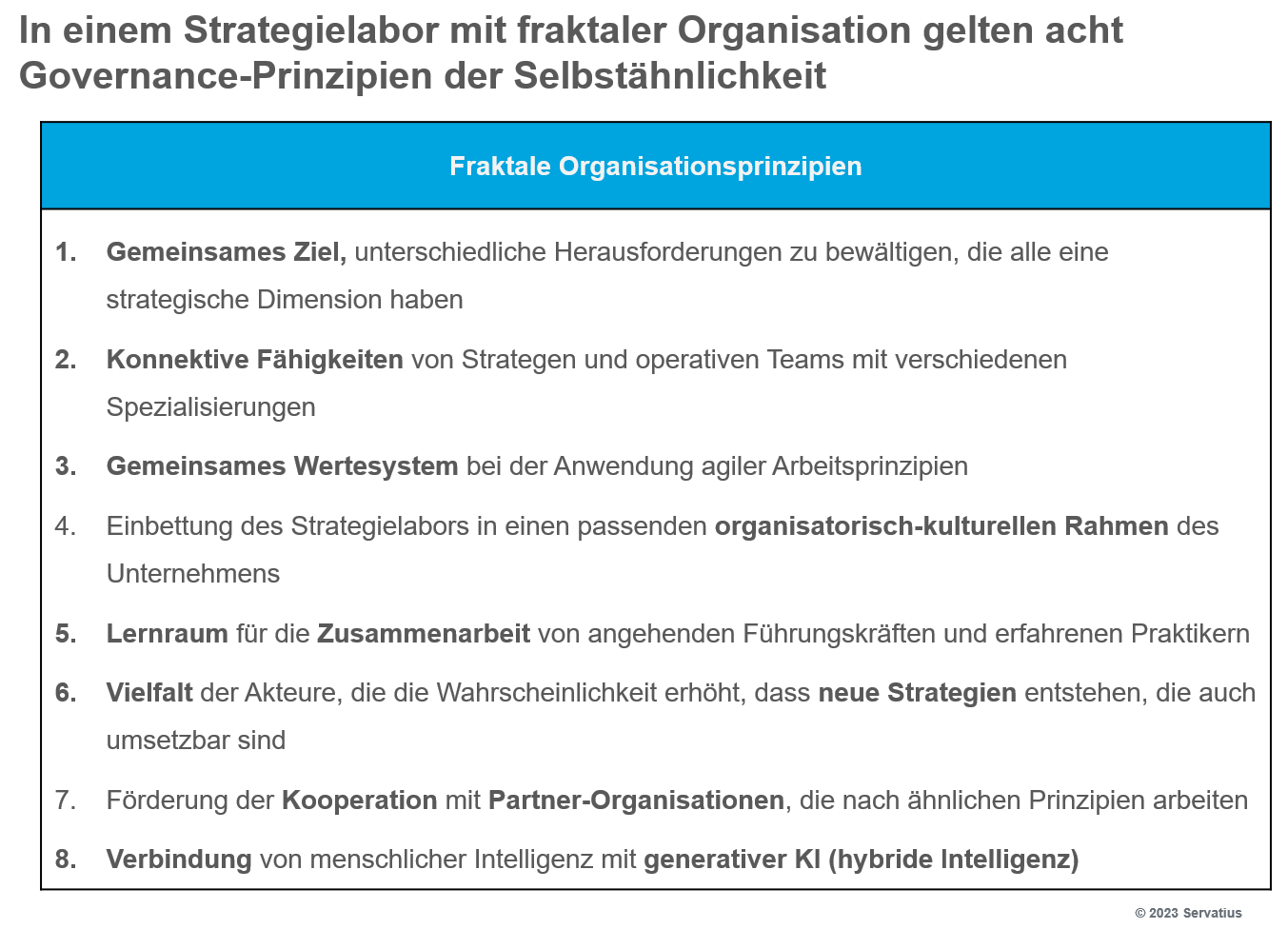
In diesen Strategielaboren mit fraktaler Organisation gelten acht Governance-Prinzipien der Selbstähnlichkeit, die in der Abbildung zusammengefasst sind.


Lernprozess Innovationsstrategie


Das erste Prinzip ist das gemeinsame Ziel, unterschiedliche Herausforderungen zu bewältigen, die alle eine strategische Dimension haben. Auf diese Weise wird einer Fragmentierung des strategischen Denkens und Handelns entgegenwirkt.

Prinzip zwei sind die konnektiven Fähigkeiten von Strategen und operativen Teams mit verschiedenen Spezialisierungen. Diese Fähigkeiten verbinden die Akteure bei der Strategieentwicklung und -umsetzung in den Handlungsfeldern.

Ein weiteres verbindendes Element ist ein gemeinsames Wertesystem bei der Anwendung agiler Arbeitsprinzipien. So werden auch in größeren Organisationen schnelle Richtungsänderungen gefördert. Hierbei hilft ein agiles Performance Management mit der Objectives and Key Results (OKR-) Methode.

Das vierte Prinzip ist die Einbettung des Strategielabors in einen passenden organisatorisch-kulturellen Rahmen des Unternehmens. Diese Einbettung verringert die Distanz zwischen strategischen und operativen Aktivitäten.

Ein solches Strategielabor ist ein Lernraum für die Zusammenarbeit von angehenden Führungskräften und erfahrenen Praktikern. Die dort gesammelten Erfahrungen tragen dazu bei, im Hinblick auf wichtige Zukunftsthemen, wie der Anwendung von Künstlicher Intelligenz, Brücken zwischen den Generationen zu bauen.

Diese Vielfalt der Akteure erhöht die Wahrscheinlichkeit, dass innovative Strategien entstehen, die auch umsetzbar sind. So kann es gelingen, weit verbreitete Innovationsbarrieren zu überwinden.

Ein siebtes Prinzip ist die Förderung der Kooperation mit Partner-Organisationen, die nach ähnlichen Grundmustern arbeiten. In einer Zeit, in der der Wettbewerb zunehmend zwischen disruptiven Stakeholder-Ökosystemen stattfindet, wird ein reibungsloses Zusammenspiel der Akteure immer wichtiger.

Unsere praktische Erfahrung aus gemeinsamen Projekten mit Klienten zeigt, dass diese zukunftsorientierten Strategielabore eine vielversprechende Alternative zu den traditionellen Einheiten für Unternehmensentwicklung sind. Dabei praktizieren wir ein Action Learning für die Verbindung von kontextueller und beziehungsorientierter Intelligenz. So leisten die fraktalen Strategielabore einen wichtigen Beitrag zur Führungskräfteentwicklung.

Prinzip acht ist die Verbindung von menschlicher Intelligenz mit generativer KI zu einer hybride Intelligenz. Wir wollen zunächst skizzieren, welche Treiberrolle die generative KI inzwischen übernommen hat.


Generative KI als Game Changer

Als Tim Kaufmann von SAP und ich 2020 unser Buch „Das Internet der Dinge und Künstliche Intelligenz als Game Changer“ publiziert haben,14 ahnten wir, dass die Entwicklung noch dramatischer verlaufen könnte als damals prognostiziert wurde. Dieser Fall ist inzwischen eintreten. Nach Analysen des Marktforschungsunternehmens IDC werden die weltweiten Investitionen in Künstliche Intelligenz von 2023 bis 2026 von 151,4 auf 308,3 Milliarden US-Dollar steigen. Ein wichtiger Treiber dieser Entwicklung ist eine neue KI-Generation großer Sprachmodelle wie GPT mit einer Vielzahl möglicher Anwendungsfelder.15 Hierbei steht die Abkürzung GPT für Generative Pre-Trained Transformer.

Große Sprachmodelle (Large Language Models LLM) nutzen künstliche neuronale Netzwerke, die mit Hilfe eines selbst-überwachten Lernens das nächste Wort in einem Satz vorhersagen. Sie gehören zum Typ der generativen Künstlichen Intelligenz, die Texte oder Bilder als Antwort auf gesprochene Fragen erzeugt.

Im Zentrum des Hypes um generative KI steht das von Peter Altmann gegründete Start-up-Unternehmen OpenAI, an dem Microsoft beteiligt ist. OpenAI hat nicht nur den Super-Chatbot ChatGPT entwickelt, sondern mit Dall-E auch ein Programm, das zu Texteingaben komplexe Bilder generieren kann.

Zwischen Digitalriesen wie Microsoft, Alphabet/Google und dem chinesischen Unternehmen Baidu ist ein Kampf um die Vorherrschaft bei der generativen KI entbrannt. So hofft Microsoft, mit einer Integration von generativer KI in seine Suchmaschine Bing im Wettbewerb mit dem Marktführer Google aufholen zu können.

OpenAI hat Mitte März 2023 seine neue Version GPT-4 vorgestellt, die eine deutliche Verbesserung gegenüber der Version 3.5 darstellt. Hierzu zählen z.B. Innovationen wie eine „Systembotschaft“, mit der Anwendende eine genaue Nutzung oder einen Nutzungsstil anfordern können. Der CEO von Microsoft Satya Nadella, der GPT-4 als wichtige Ergänzung seiner Cloud-Infrastruktur Azure betrachtet, spricht von einer „Neuerfindung der Produktivität durch KI“.16

Während große Digitalkonzerne und Start-ups um die KI-Führerschaft ringen, diskutiert die Europäische Union (EU) den sogenannten AI Act, der im Sommer 2023 in Kraft treten soll. Dieses Regelwerk versucht, alle erdenklichen Risiken im Zusammenhang mit Künstlicher Intelligenz zu vermeiden. Neben der Nachhaltigkeitsberichterstattung entsteht so in Europa ein weiteres Bürokratiemonster.


Implikationen für die Strategiearbeit von Führungskräften

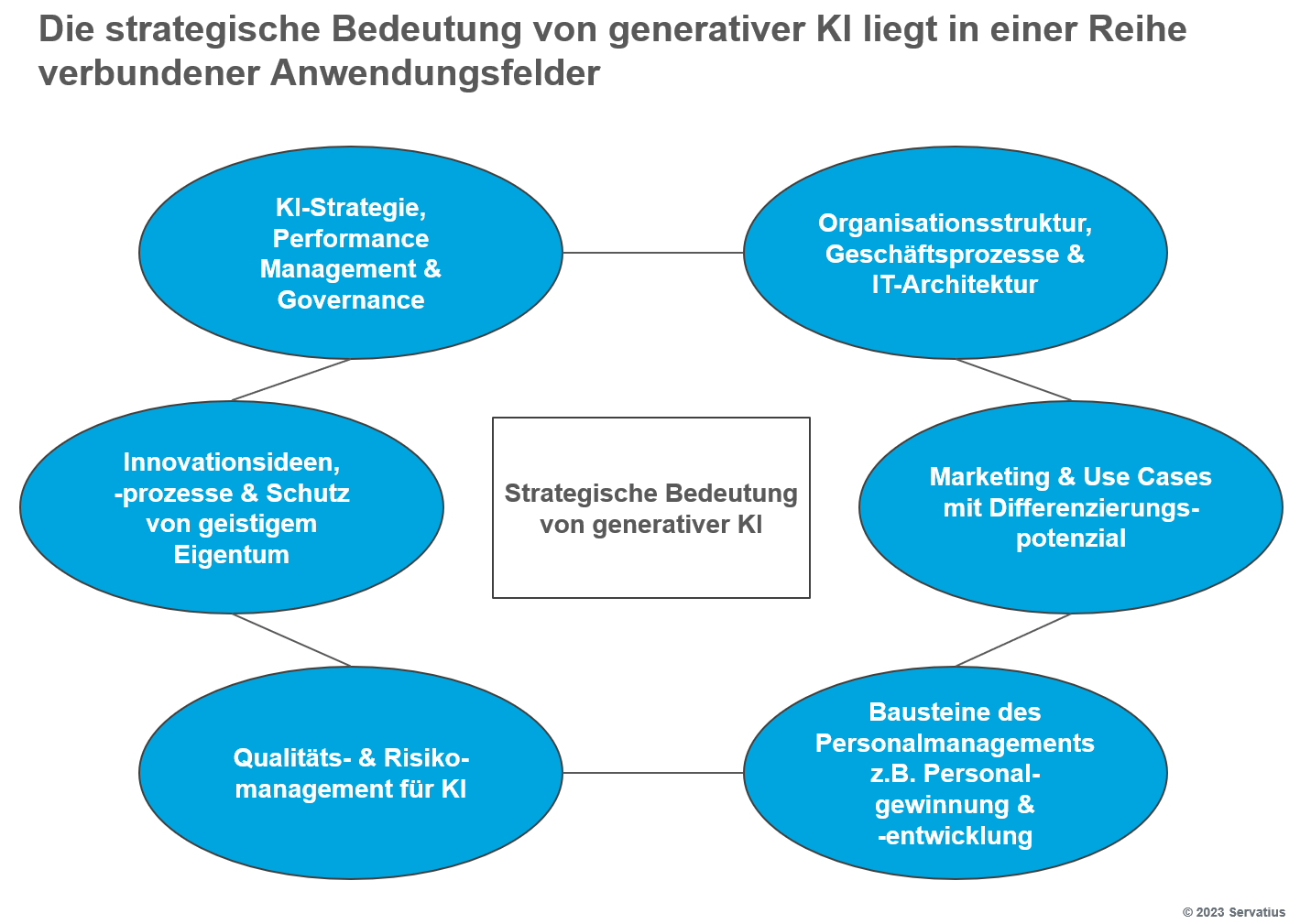
Dies alles hat gravierende Auswirkungen für wissensintensive Prozesse in Unternehmen und deren Strategieabteilungen. Dabei liegt die strategische Bedeutung von generativer KI darin, dass die Sprachmodelle die Arbeit von Führungskräften in einer Reihe verbundener Anwendungsfelder unterstützen kann.17 In der Abbildung sind einige Beispiele dargestellt. Für die Strategiearbeit bedeutet dies, dass es immer mehr darauf ankommt, die neuen mächtigen Werkzeuge geschickt zu nutzen. Konkret heißt das, die richtigen Fragen zu stellen, mögliche Effizienz- und Geschwindigkeitsvorteile bei Recherchen zu nutzen, die Qualität der Ergebnisse zu kontrollieren und Resultate aus verschiedenen Feldern kreativ zusammenzufügen.


Lernprozess Innovationsstrategie


Vor allem für kleinere Unternehmen besteht dabei die Gefahr, in eine starke Abhängigkeit von großen Digitalkonzernen zu geraten, an die man Teile der Strategiearbeit auslagert. Ein besserer Weg wäre, die eigene Kompetenz im Umgang mit generativer KI zu steigern und die Programme mit unternehmensspezifischen Daten zu trainieren. Ein Strategielabor mit fraktaler Organisation unterstützt die Integration relevanter Aufgabenfelder.


Reintegration und Erweiterung des strategischen Managements

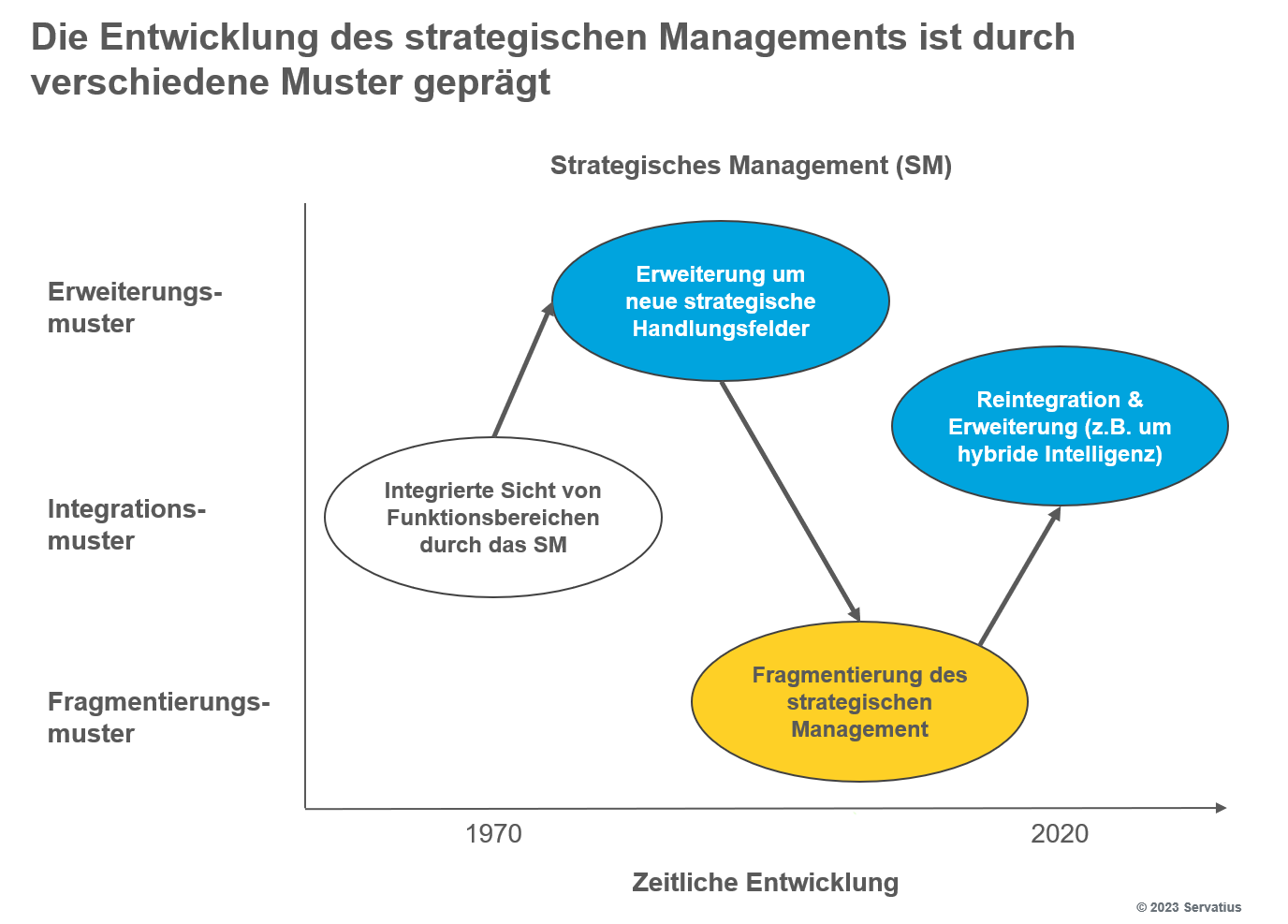
Wir können zusammenfassen, dass verschiedene Muster die zeitliche Entwicklung des strategischen Managements geprägt haben. In der Entstehungsphase ist das große Nutzenversprechen die integrierte Sicht der betrieblichen Funktionsbereiche gewesen. Da diese Sicht überwiegend marktorientiert war, erfolgte eine Erweiterung um neue strategische Handlungsfelder beginnend mit dem Thema Technologie und Innovation. Inzwischen werden die anfänglichen Vorteile der Erweiterung durch die Nachteile einer Fragmentierung des strategischen Managements überkompensiert. Hieraus ergibt sich die Notwendigkeit einer Reintegration der strategischen Handlungsfelder. Diese dialektische Abfolge von Mustern ist in der Abbildung dargestellt


Lernprozess Innovationsstrategie


Gleichzeitig vollzieht sich gegenwärtig eine erneute Erweiterung z.B. um das Thema hybride Intelligenz, die alle strategischen Handlungsfelder betrifft. Im Mittelpunkt steht dabei die Verbindung von menschlicher Intelligenz mit Werkzeugen der generativen KI wie GPT. In Analogie zum Sport könnte man sagen, dass die Disziplin Stabhochsprung eine neue Art von Stäben bekommt. Die Springer müssen aber lernen, diese innovativen Werkzeuge in einer erlaubten Weise zu nutzen. Dies hat weitreichende Implikationen für die Ausbildung und die Personalentwicklung in Organisationen. Traditionelle Inhalte in Fachdisziplinen wie der Betriebswirtschaftslehre bedürfen einer Ergänzung und Verbindung.

Im Treffen des von Frank Piller geleiteten Expertenkreises für Innovationsmanager (TIMEX) an der RWTH Aachen am 23. März 2023 zum Thema KI lag der Schwerpunkt bei einer Erweiterung der Kreativität.18 Dies ist eine wichtige Dimension. So kooperieren z.B. das dänische Pharmaunternehmen Novo Nordisk und Microsoft, um mit Hilfe von generativer KI die Innovation von Medikamenten zu beschleunigen. Eine andere Dimension ist die Veränderung von Tätigkeiten, die auf dem im Internet vorhandenen Wissen aufbauen. Führungskräfte müssen Menschen „mitnehmen“, die Sorge um ihren Arbeitsplatz haben. Möglicherweise liegt hier gegenwärtig das größte Game Changer-Potenzial.


Bessere Verbindung von strategischem und operativem Management

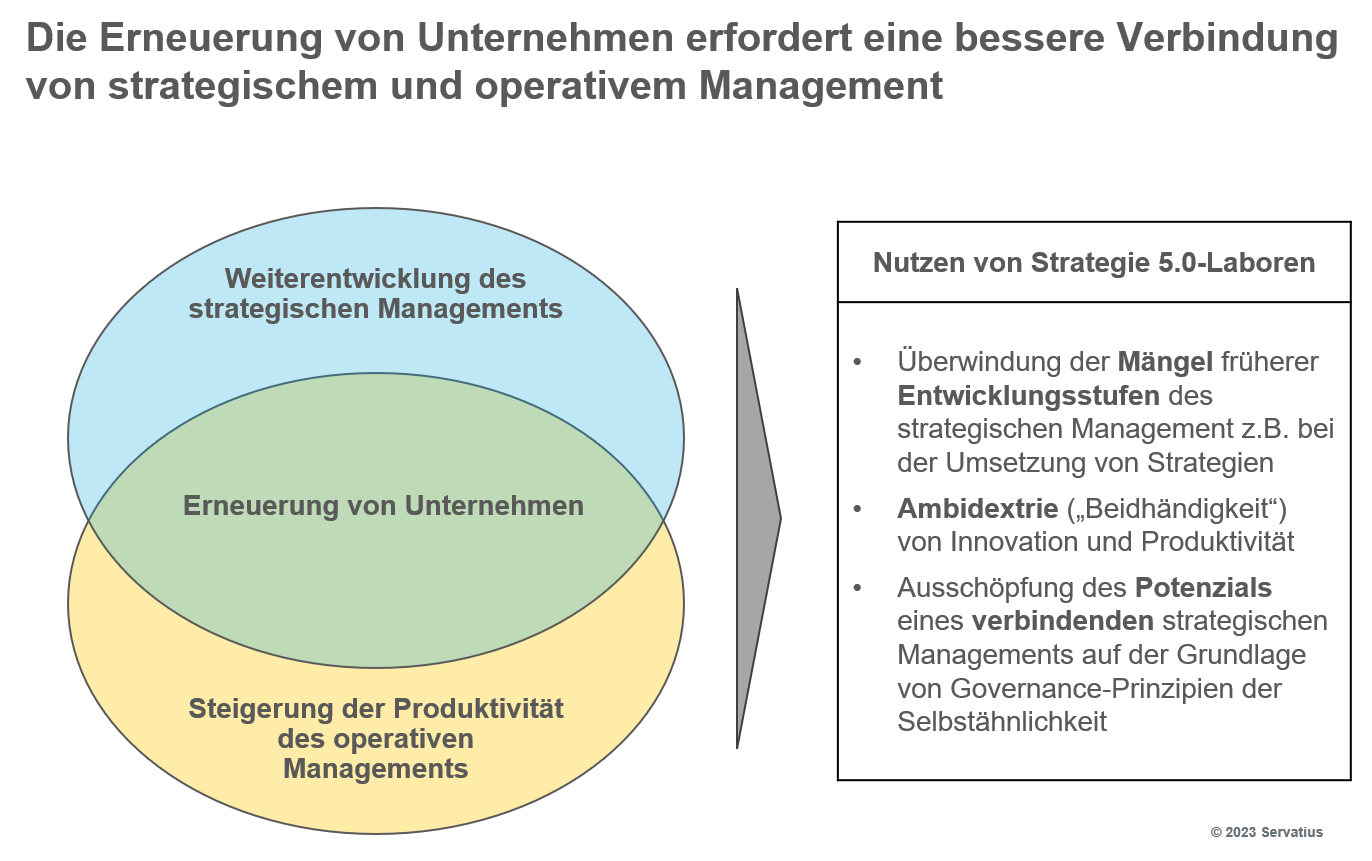
Strategie 5.0-Labore leisten einen wichtigen Beitrag zur besseren Verbindung eines weiterentwickelten strategischen Managements mit einem produktiveren operativen Management. Angesichts der zunehmenden Bedeutung der Erneuerung von Unternehmen wächst die Größe der Schnittmenge zwischen diesen beiden Managementebenen. Das Beispiel der generativen KI zeigt, wie wichtig es ist, nicht nur die Strategiearbeit um ein neues Handlungsfeld zu erweitern, sondern auch das Tagesgeschäft mit den innovativen Werkzeugen zu optimieren.


Lernprozess Innovationsstrategie


In unseren Beratungsprojekten machen wir die Erfahrung, dass der Nutzen von Strategie 5.0-Laboren vor allem in den folgenden drei Punkten liegt:

  1. Einer Überwindung der Mängel früherer Entwicklungsstufen des strategischen Managements z.B. bei der Umsetzung von Strategien19
  2. der Realisierung einer seit langem angestrebten Ambidextrie („Beidhändigkeit“) von Innovation und Produktivität in einer lernenden Organisation20 sowie
  3. einer Ausschöpfung des vollen Potenzials eines verbindenden strategischen Managements auf der Grundlage von Governance-Prinzipien der Selbstähnlichkeit.21

Daher liegt gegenwärtig der Schwerpunkt unserer anwendungsorientierten Forschung gemeinsam mit Klienten in einer Vertiefung der Erkenntnisse zu diesem neuen Managementkonzept.

Fazit

  • In der fünften Entwicklungsstufe eines verbindenden strategischen Managements entstehen aus Einheiten für Unternehmensentwicklung Strategielabore mit einer fraktalen Struktur
  • Fraktale sind durch Selbstähnlichkeit auf unterschiedlichen Größenskalen gekennzeichnete Gebilde oder Muster
  • Diese Strategie 5.0-Labore unterstützen die Aufsicht und Führung im Rahmen von neuen Organisationsformen mit einer zentralen Infrastruktur-Plattform, agilen Teams und einem disruptiven Stakeholder-Ökosystem
  • Fraktale Strategielabore verbinden Handlungsfelder, die in den verschiedenen Entwicklungsstufen des strategischen Managements entstanden sind. Damit verfolgen Unternehmen das Ziel, einer Fragmentierung entgegenzuwirken und eine kreative Integration wiederherzustellen
  • Die Gestaltung von fraktalen Strategielaboren orientiert sich an acht Governance-Prinzipien der Selbstähnlichkeit
  • Diese Entwicklung wird durch den aktuellen Technologietrend einer generativen KI beschleunigt, der erhebliche Kreativitäts- und Produktivitätsgewinne bei der Zusammenarbeit von Strategieexperten und operativen Teams ermöglicht
  • Das Neue an Strategie 5.0-Laboren ist die gleichzeitige Reintegration und Erweiterung strategischer Handlungsfelder
  • Strategie 5.0-Labore fördern eine bessere Verbindung zwischen dem strategischen und dem operativen Management


Literatur

[1] Servatius, H.G.: Strategie 5.0 zur Bewältigung der neuen Herausforderungen. In: Competivation Blog, 28.06.2022

[2] Bhattacharya, A., Bürkner, H.P., Bailey, A., Verma, S.: The Organization of the Future is Fractal, 31. Mai 2022

[3] Mandelbrot, B.B.: Die fraktale Geometrie der Natur, Bagel 1991

[4] Warnecke, H.J.: Die Fraktale Fabrik – Revolution der Unternehmenskultur, Berlin 1992

[5] Servatius, H.G.: Reengineering-Programme umsetzen – Von erstarrten Strukturen zu fließenden Prozessen, Stuttgart 1994, S. 121 ff.

[6] Bhattacharya, A., Bürkner, H.P., Gallego, A.: Building Fractal Advantage in a Fragmenting World, 15. November 2021

[7] Khanna, T.: Contextual Intelligence. In: Harvard Business Review, September 2014

[8] Servatius, H.G.: Die Ressourcen-Plattform mit agilen Teams als neue Organisationsform. In: Competivation Blog, 12.01.2021

[9] Scheer, A. W.: Composable Enterprise – Paradigmenwechsel für Digitalisierung und Unternehmenssoftware. In: IM+io – Best & Next Practices aus Digitalisierung, Management und Wissenschaft, 38. Jahrgang, Heft 1, 2023, S. 96-109

[10] Servatius, H.G.: Der Megatrend Konnektivität und seine Treiber. In: Competivation Blog, 13.10.2021

[11] Servatius, H.G.: Gestaltung von innovativen Stakeholder-Ökosystemen. In: Competivation Blog, 10.01.2023

[12] Servatius, H.G.: Strategisch führen mit kontextueller und beziehungsorientierter Intelligenz. In: Competivation Blog, 14.03.2023

[13] Hauser, E. (Hrsg.): Clustermanagement – Wie Cluster die Innovation und Wettbewerbsfähigkeit unterstützen, Wiesbaden 2017

[14] Kaufmann, T., Servatius, H.G.: Das Internet der Dinge und Künstliche Intelligenz als Game Changer – Wege zu einem Management 4.0 und einer digitalen Architektur, Wiesbaden 2020

[15] Kerkmann, C.: SAP lotet Einsatz von ChatGPT aus. In: Handelsblatt, 15. März 2023, S. 24-25

[16] Holtermann, F., Jahn, T., Scheuer, S.: Neue Runde im Ringen um die KI-Vorherrschaft. In: Handelsblatt, 16. März 2023, S. 20-21

[17] Candelon, F., Gupta, A., Krayer, L., Zhukov, L.: The CEO’s Guide to the Generative AI Revolution, 7. März 2023

[18] Bouchery, S.G., Blazevic, Piller, F.T.: Augmenting Human Innovation with Artificial Intelligence – Exploring Transformer-based Large Language Models. In: Journal of Product Innovation Management, Volume 40, Issue 2, S. 139-153 (10. Januar 2023)

[19] Servatius, H.G.: Let’s Connect! Personalentwicklung für Stakeholder-Ökosysteme. In: IM+io – Next Practices aus Digitalisierung, Management und Wissenschaft, 38. Jahrgang, Heft 1, 2023, S. 40-43

[20] Servatius, H.G.: Ambidextrous Leadership zur Bewältigung des digitalen Wandels. In: Competivation Blog, 13.06.2017

[21] Servatius, H.G.: Corporate Governance für den strategischen Wandel. In: Competivation Blog, 16.11.2022

Interessiert?

CONNECTIVE MANAGEMENT

Vereinbaren Sie einen unverbindlichen Gesprächstermin:


    +49 (0)211 454 3731