
innovative education providers | Competivation
How AI is changing management consulting

How AI is changing management consulting

For decades, the global success of management consulting has been based on identifying new challenges early on and developing solutions that are both theoretically sound and practical. Artificial intelligence (AI) is one such challenge that is also fundamentally changing the consulting industry itself. Starting with an explanation of this evolution, I explore the implications it has for management theory and research.

In this new article, I examine the impact of artificial intelligence on the evolution of management consulting. At the same time, universities and business schools are facing a profound change, which our network of experts has investigated.


Management consulting as a career accelerator

For a long time, working at one of the leading consulting firms was considered an important step toward an accelerated career in management. In particular, the major strategy firms hired candidates with strong analytical and communication skills who were able to contribute to solving complex problems and support their implementation. A consulting career typically began with several busy years of research and preparing presentations, which were critically evaluated by project managers. Through this learning process, young consultants developed skills that universities had not taught them.1 Today, AI models handle a significant portion of this work, operating at breathtaking speed, at comparatively low cost, and with surprisingly good results. The world of consulting has changed.


Key factors and consequences of the evolution of traditional management consulting

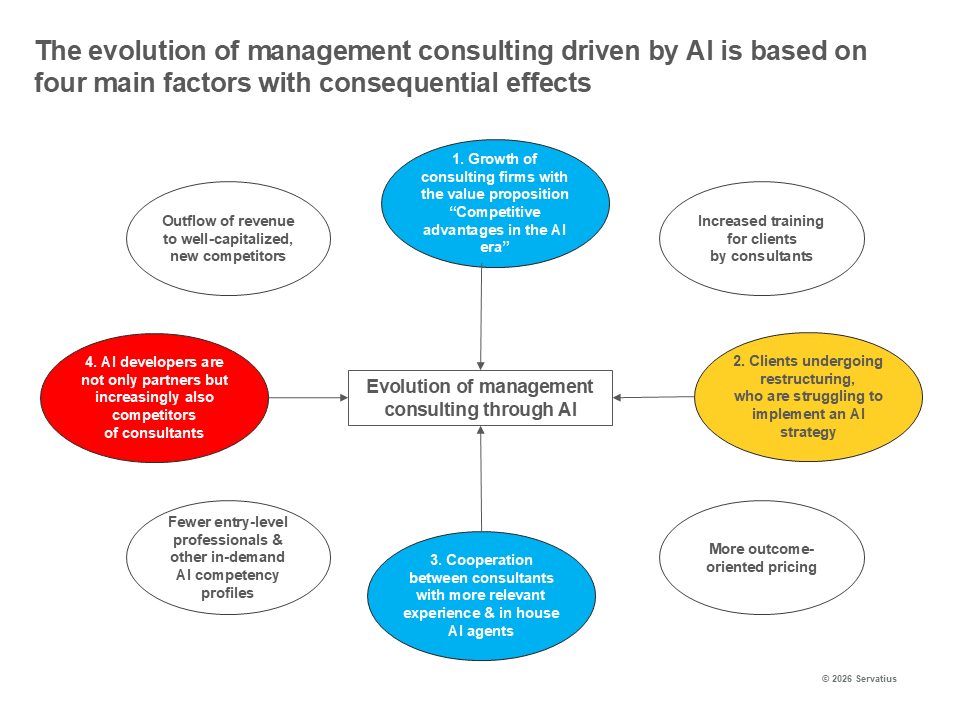
Traditional management consulting is currently undergoing what is arguably the most significant evolution of the past decades. The catalyst for this change is artificial intelligence.2 An examination of the causes points to the following four key factors:

  1. Potential growth for consulting firms offering clients the value proposition of “competitive advantages in the AI era”
  2. Clients undergoing restructuring processes who are struggling to successfully implement an AI strategy
  3. Cooperation between consultants with more relevant experience and in-house AI agents, as well as
  4. AI developers who are not only partners of the consulting firms but are increasingly becoming their competitors as well.

These key factors lead to further consequential effects.
Lernprozess Innovationsstrategie

The value proposition for clients and their internal challenges create a need for consultants to provide clients with more training. For example, in 2024, Accenture acquired Udacity, a provider of Massive Open Online Courses (MOOCs), and realigned its business model more toward B2B.

Since billing by the hour is no longer appropriate when using in-house AI agents, pricing is becoming more outcome-oriented. However, it is not easy to determine who is ultimately responsible for unsatisfactory results and what the reasons for them are.

As routine tasks are increasingly taken over by AI for clients and consulting firms, both are faced with the question of whether they should hire fewer entry-level professionals. This is changing organizational structures and skill profiles. But the people with AI experience that firms are seeking are also finding interesting opportunities elsewhere.

In addition, major developers of AI models—who in recent years have gone from being partners of consulting firms to their competitors—are increasingly relying on Forward Deployed Engineering (FDE), a methodology developed at Palantir, when implementing AI strategies. This is resulting in a loss of revenue in the growing AI consulting segment to very well-capitalized new competitors who are seeking to create a lock-in effect among corporate clients.3

Compounding these factors is the fact that we are currently witnessing the transition to a new era of management.


Transition to a new era of management

Throughout the history of consulting, there have been several transitions to new or significantly altered management eras. For me personally, it was particularly formative to witness how the market- and finance-oriented strategic management of the early 1980s gave rise to a second stage of development that was more strongly focused on technological innovations.4

During these phases of transition, visionary researchers and consulting pioneers often outpace current management practices. This can lead to innovative consultants having difficulty conveying their ideas to clients for a time. As a result, these consultants are always on the lookout for thought leaders on the client side. Problems arise when there is a shortage of thought leaders and trailblazers in a given country.

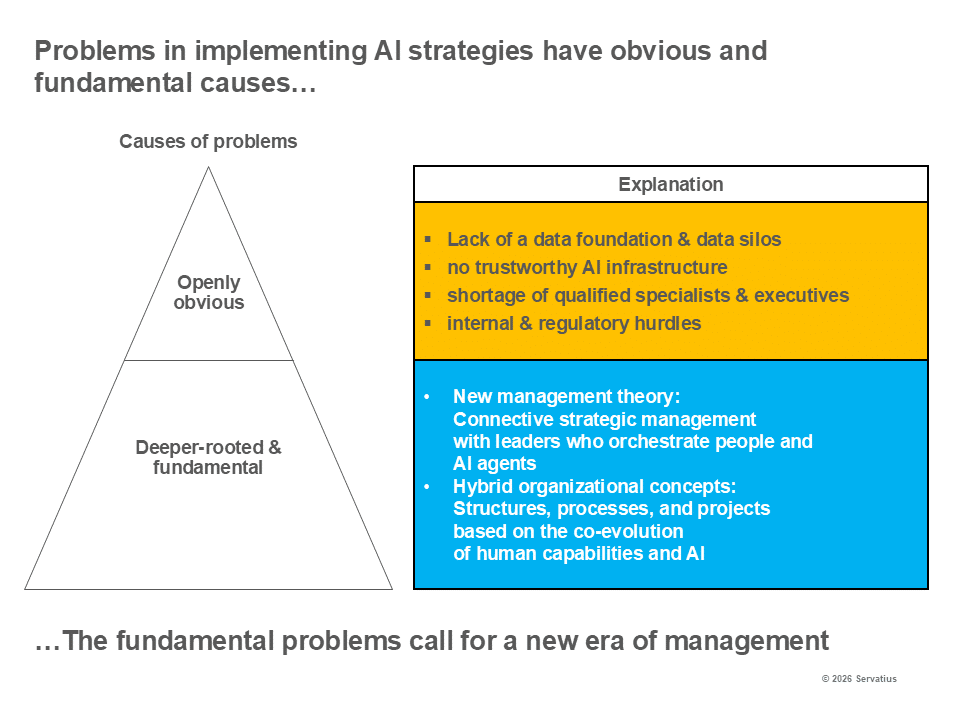
There are currently significant challenges in implementing AI strategies. In addition to obvious causes, these implementation difficulties are compounded by deeper-rooted and more fundamental issues. Many companies clearly face problems such as

  • a lack of a data foundation and data silos
  • no trustworthy AI infrastructure
  • a shortage of qualified specialists and executives, as well as
  • internal and regulatory hurdles.

As part of a further development of the management practices used to date, it should be possible to overcome these challenges. The situation is different when it comes to fundamental problems. Mastering them marks the transition to a new era of management.
Lernprozess Innovationsstrategie

Characteristics of this emerging next stage include a new management theory and hybrid organizational concepts.

As early as 1954 and 1969, Peter Drucker shaped an entire era with his groundbreaking publications on Management by Objectives (MbO) and the knowledge society.5 At the heart of a new theory lies connective strategic management (Strategy 5.0), with leaders who orchestrate both people and AI agents.6 In parallel, hybrid organizations are emerging with structures, processes, and projects based on the co-evolution of human capabilities and AI.

The necessary realignment toward a corresponding Management Education 5.0 for the AI era is a fundamental challenge that Germany must overcome.7 There is a strong tendency toward inertia here, and disruption in management education and training is, at best, only beginning to emerge.8


Changes in management theory and research on AI

Traditional business administration programs essentially teach the theoretical foundations for entry-level positions. This is due, among other things, to the fact that university professors are primarily academically qualified. When they are appointed, the focus is on publications in top-tier journals rather than on experience outside the academic world. Consequently, at prestigious consulting firms, it typically takes another three “years of apprenticeship” before a consultant with top grades and a Ph.D. is promoted to project manager. This raises the question of the implications for educational providers if, in management consulting and beyond—in the business world in general—not only are many entry-level positions being eliminated due to AI, but the required qualifications are also changing at all hierarchical levels.

For example, a study by the online platform Indeed shows that the number of entry-level positions has fallen by more than two-thirds between the boom year of 2022 and the fall of 2026. The decline was particularly sharp in marketing, at 75 percent.9 Alongside the economic downturn, AI is a major driver of this trend.

Both management consulting firms and their clients have a strong interest in recruiting candidates from universities who are better prepared for the AI era. There are at least three reasons for this:

  1. Newly hired consultants coming straight from college should be able to work on this new type of consulting project without extensive training
  2. Consulting firms, whose revenue depends more heavily on the success of cooperative project work, need clients with broad AI expertise—expertise they can only partially develop from external sources—and
  3. If AI developers and consultants use the “Forward Deployed Engineering” approach—originated at Palantir—when implementing their clients’ strategies, this results in a systematic outflow of knowledge from the client to the service provider, which weakens the client’s competitiveness in the medium term. This cannot be in the client’s best interest.

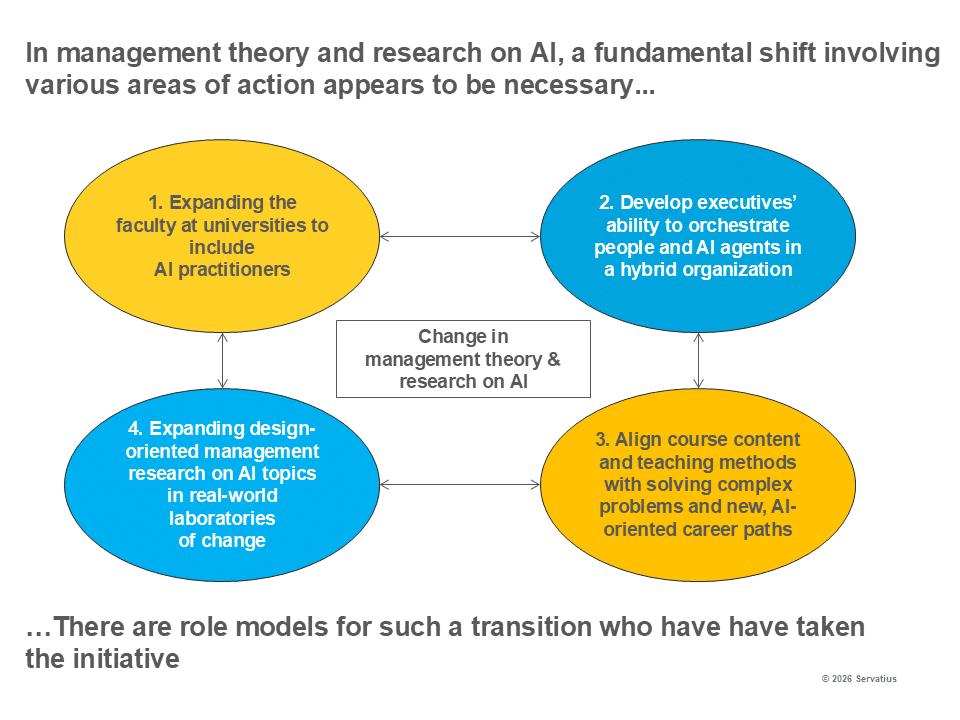
In management theory and research on AI, a fundamental shift therefore appears necessary, encompassing the following four areas of action:

  1. Expanding university faculty to include AI practitioners
  2. executive development aimed at orchestrating people and AI agents within a hybrid organization
  3. aligning course content and teaching methods with the solving of complex problems and new, AI-oriented career profiles
  4. expanding design-oriented management research on AI topics conducted in real-world laboratories of change.

There are role models both abroad and in Germany that have taken the initiative to drive such a transformation.
Lernprozess Innovationsstrategie

For decades, there has been a tension in management theory and research between scientific rigor and practical relevance. At U.S. business schools, a stronger scientific orientation began in the late 1950s with the help of quantitative empirical research. This approach was adopted by German universities. In the U.S., however, a pragmatic reorientation toward a “both-and” approach took place much earlier than in Germany, driven by market pressures. At high-cost elite universities, for example, renowned practitioners (Professors of Practice) complement the academic faculty. In the age of artificial intelligence, this mixed staffing structure is gaining importance worldwide.10 Anyone who invests a substantial sum in an MBA program wants that business school to prepare its students—both theoretically and practically—for a job market that is undergoing dramatic change due to AI. Universities in Germany are now also striving for such a realignment. Overall, however, there is a relatively strong tendency here to cling to the status quo.

The starting point for change is often executive development in general and company-specific (customized) Executive MBA programs. Today, aspiring executives must learn how to successfully orchestrate hybrid teams composed of people and AI agents. Interestingly, in a Financial Times ranking of customized executive development programs aimed at corporate realignment, European universities such as SDA Bocconi (Milan), London Business School, and IMD (Lausanne) occupy the top spots. U.S. business schools such as MIT, Stanford, and Wharton score highly for their expertise in AI technologies.

Furthermore, in many fields, it is crucial to improve the ability to solve complex problems and to develop skills for new job profiles. Only a few universities are prepared for this kind of reskilling. However, this is critical to Europe’s efforts to catch up in the field of AI. The necessary impetus for a corresponding realignment of course content and teaching methods comes primarily from innovative educational providers and foundations that draw on international best practices.11 The justified Gen Z demonstrations make it clear that the pressure is mounting. Today’s students should learn how to use AI to solve complex problems faster and more effectively. They can then demonstrate this ability in their theses by using AI as a sparring partner—for example, to refine research questions, examine a topic from different angles, and identify gaps. In the old world of consulting, this was one of the basic skills that “consulting trainees” learned. With AI, the whole process has become much simpler, and universities should teach this skill as early as the first semesters.

Another area of focus is design-oriented management research on AI topics. Experts are watching Germany with great interest and expect a stronger integration of engineering knowledge and industrial AI expertise with new management skills. German global market leaders and startups are demonstrating how such research works in real-world laboratories of change. To support this, an innovation policy that overcomes traditional silo thinking must create suitable framework conditions. At the University of Stuttgart, where I have been teaching strategy and organization since the 1980s, we have long been practicing this research approach within the framework of technically oriented business administration.12 Personally, I have always found teaching and research to be very enriching, alongside leadership positions in management consulting. However, it is time for Germany to better institutionalize this dual role.


Conclusion

  • Artificial intelligence is leading to a fundamental change of both the business model and organizational structure of management consulting firms, as well as the relevant competencies of consultants
  • This evolution is taking place as we transition into a new era of management, in which executives will, for the first time, orchestrate both people and AI agents. This requires new approaches to management education
  • For a number of reasons, both management consulting firms and their clients have a vested interest in universities better preparing students for the AI era
  • To achieve this, universities must make their education and research more practice-oriented and more design-oriented. In doing so, they must overcome forces of inertia.


References

[1] Kiechel, W., The Lords of Strategy – The Secret Intellectual History of the New Corporate World, Harvard Business Press 2010

[2] Duncan, D.S., Anderson, T., Saviano, J., AI is Changing the Structure of Consulting Firms. In: Harvard Business Review, September 10, 2025

[3] Servatius, H.G., Implementing AI Strategies with a Forward Deployed Engineering approach. In: Competivation Blog, October 29, 2026

[4] Servatius, H.G., Development and change in strategic management. In: Competivation Blog, September 19, 2025

[5] Drucker, P.F., The Practice of Management, Harper 1954, p. 121 ff.

Drucker, P.F., The Age of Discontinuity – Guidelines to Our Changing Society, Heinemann 1969, pp. 247 ff.

[6] Servatius, H.G., Connective strategic management in the age of AI. In: Competivation Blog, May 22, 2026

[7] Servatius, H.G., Management Education 5.0 for Dialog-based Action. In: Competivation Blog, January 13, 2024

[8] Servatius, H.G., Disruption of management education for AI-based realignments. In: Competivation Blog, October 10, 2025

[9] Indeed, Starting a Career Is Getting Harder—Two-Thirds Fewer Entry-Level Jobs Since 2022, but Apprenticeship Positions Are Holding Steady, September 23, 2026

[10] Servatius, H.G., AI and the future of management education. In: Competivation Blog, April 9, 2025

[11] Servatius, H.G., Generative AI and Mass-Customized Action Learning. In: Competivation Blog, August 28, 2023

[12] Servatius, H.G., Design-oriented innovation research on AI applications. In: Competivation Blog, March 25, 2026

Design-oriented innovation research on AI applications

Design-oriented innovation research on AI applications

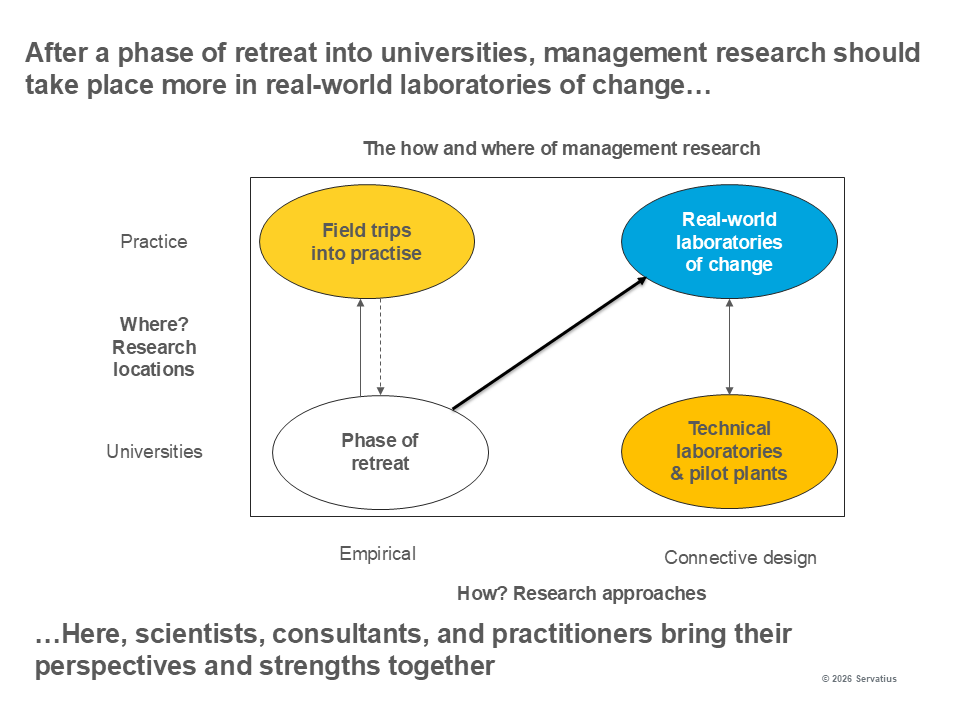
Around the world, many companies face the challenge of keeping pace with artificial intelligence (AI) and gaining a competitive edge through AI tools that leverage their specific expertise. This development is leading to a renaissance in design-oriented management and innovation research, which aims to bridge the gap between theory and practice. In the process, research is shifting from empirical work at universities to connective design in real-world laboratories of change.


In this blog post, I outline the development of the design-oriented research approach, highlight its advantages, and explain a general procedural concept.


A decisive year for AI adoption

2026 could be the year that determines for many companies whether they achieve a breakthrough in AI adoption or remain stuck with isolated pilot projects. According to an analysis by the market research firm Forrester, only 15 percent of decision-makers report that the use of AI has so far made a measurable contribution to their companies’ operating results. This could lead them to postpone about a quarter of their planned AI spending until 2027. However, the danger of being too hesitant in adopting AI is that it creates a gap that is difficult to close.1

On the other hand, pioneering companies are succeeding in achieving significant competitive advantages with AI tailored to their specific situations. These pioneers practice design-oriented management and innovation research to lay the groundwork for success. One example is Siemens, which aims to develop the world’s largest and broadest range of industrial AI applications and double its enterprise value.2

The German Economic Research Institute (IW) forecasts that the potential for increasing gross value added through the use of AI in Germany by 2034 stands at 440 billion euros. Of this, 110 billion euros is attributable to potential innovations and 330 billion euros to increased productivity. For Germany as an industrial hub, the application of AI in particular presents an opportunity. Google, a subsidiary of the U.S. technology conglomerate Alphabet, has also recognized this. It plans to invest 5.5 billion euros in Germany and open a center for AI applications in Berlin, where its own researchers will also be based.3

This new situation has exciting implications for the design of AI ecosystems.


Designing AI ecosystems

The opportunity for established companies lies in knowledge-specific AI, where AI tools leverage and amplify the companies’ specialized expertise.4 This is most effectively achieved within AI ecosystems.

The term “AI ecosystem” refers to a dynamic network with strong connections between various actors who use AI technologies to create and disseminate innovations. AI ecosystems can be concentrated in a single region and have developed around a central hub, such as a university or a company. The world’s best-known and most influential AI ecosystem emerged in Silicon Valley in the San Francisco Bay Area. Stanford University near Palo Alto formed the core of Silicon Valley in the 1930s. In 1939, Bill Hewlett and David Packard founded the company HP there in a garage. Later, leading semiconductor companies – which gave the valley its name – and some of the major AI providers established themselves here.

Stanford University served as a model for Helmut Schöneberger, the head of the Munich-based startup incubator UnternehmerTUM. Crucial to its success were the collaboration with the Technical University of Munich and the support of BMW shareholder Susanne Klatten. In addition, other startup incubators have emerged in Munich, such as the Center for Digital Technology and Management (CDTM), which offers the transdisciplinary master’s program in Technology Management, works closely with industry partners, and has spawned over 250 startups.

By 2025, startups in Munich had received 3.3 billion euros in venture capital, thereby pushing Berlin into second place in this category, where startups raised 2.7 billion euros. However, AI ecosystems with successful startups have also emerged in other German regions.

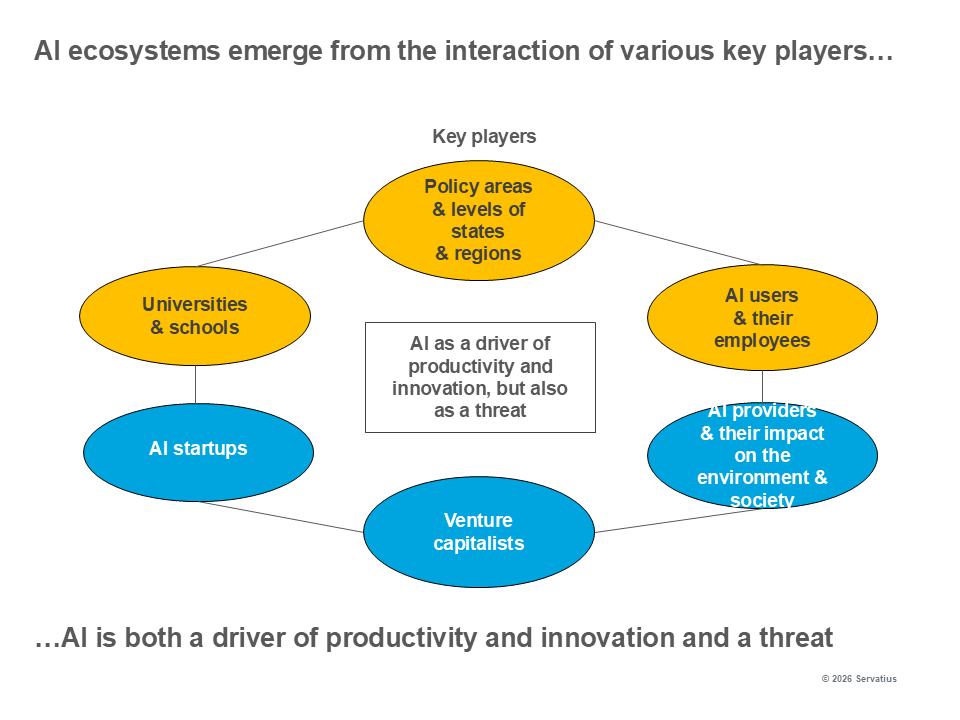
Key players in AI ecosystems include:

  • Decision-makers in relevant policy areas and at various levels of state and regional government
  • Universities and schools
  • AI startups that originated as spin-offs or have established themselves in a region
  • Venture capitalists who use venture capital to finance the growth of AI startups
  • Major providers of AI hardware and software that shape financial markets with their financial clout and have a significant impact on the environment and society, as well as
  • established companies and their employees, who use AI, collaborate with startups, and invest in them.

Pharmaceutical research provides an interesting example of new opportunities for collaboration between established companies and startups.

Lernprozess Innovationsstrategie

In the pharmaceutical industry, tech-bio companies, such as the French startup Owkin, are accelerating early-stage drug discovery with the help of AI. A first wave of drugs developed in this way is currently in clinical trials. One possible form of collaboration is for AI biotechs to take on early-stage drug discovery and for established pharmaceutical companies to handle the later phases and commercialization. Another option is for pharmaceutical companies to acquire AI startups and build up their own relevant capabilities. In any case, this research-intensive industry is facing a fundamental change, in which the design of AI ecosystems is a key success factor.5 This example illustrates that as industries evolve, management research changes as well.

However, artificial intelligence is not only a driver of productivity and innovation but also poses a potential threat. In light of geopolitical shifts, it is crucial for Europe to regain its ability to shape the future. A trustworthy AI can be an important means to this end. The recent dispute between the U.S. government and the U.S. startup Anthropic illustrates just how political the design of AI ecosystems has become.6 This, too, is leading to significant changes in management research.

An important aspect that is often overlooked in AI ecosystems is the environmental and social impact of AI technologies. For instance, large language models require the work of crawlers that collect data and annotators who comment on, evaluate, and label texts and images. This work often takes place out of the public eye, frequently in countries of the “Global South.” Transparency in these supply chains is low.7


Management research in real-world laboratories of change

Empirical approaches, predominantly originating from universities, have long dominated business research. The authors publish the results of their work in academic journals, which practitioners rarely read. Critics of this retreat into an “academic ivory tower” argue that the practical relevance of research has diminished. This criticism is not new, but it has grown stronger.8

Universities defend their position by arguing that the practical relevance of empirical research is based on “field trips” in which the perspectives of relevant actors are analyzed. However, the goal of such work is generally not to design concrete objects – such as new AI-based business models –within their specific context.9

In this respect, business research differs from the design-oriented approach of engineering sciences, which takes place predominantly in laboratories and pilot plants.

Due to the growing importance of inter- or transdisciplinary research, the proportion of connective design is also increasing in management science. This practice- and design-oriented research is increasingly taking place in real-world laboratories of change.10 A key driver of this development is artificial intelligence, which acts as a catalyst for the founding of startups and the realignment of established companies. We believe that, following a phase of retreat into universities, management research should once again take place more strongly in practice and utilize design-oriented approaches.

Lernprozess Innovationsstrategie

This response to the questions of how and where research approaches should be conducted marks the beginning of a new chapter in the history of management research. A key feature of this reorientation toward connective design is research in which scientists, consultants, and practitioners bring their diverse perspectives and strengths together. The benefit lies in better solutions to complex problems based on new scientific insights.11

The development of humanoid robots provides an example. In this rapidly growing market, companies have the best chances when they combine software and hardware expertise. Data from the real world is the biggest bottleneck here. The Metzingen-based manufacturer Neura Robotics has therefore decided to build training facilities for robots. One of the first of these “gyms” is being developed in collaboration with the Technical University of Munich at the Munich Institute of Robotics and Machine Intelligence (MIRMI) at Munich Airport. In international competition with companies from the U.S. and China, rapid scaling is crucial for this AI application.12

Since design-oriented management research is less widespread, I would like to briefly outline its history. Personally, over the past few decades, I have repeatedly observed how different the thought and language patterns of the relevant actors are in theory and practice.


Principles and pioneers of creative management research

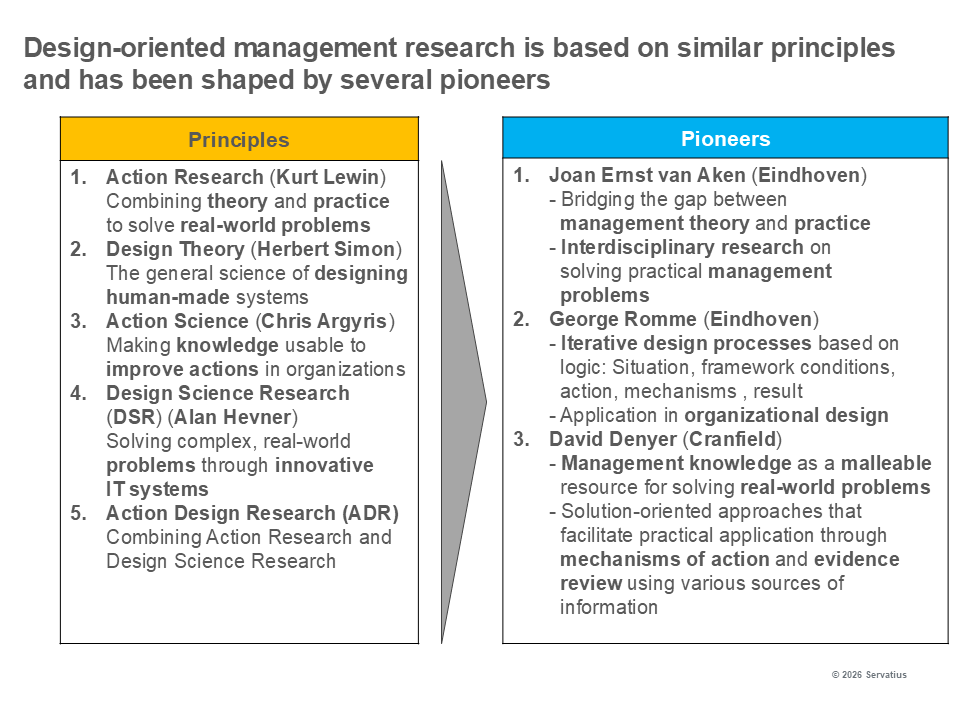
Design-oriented management research is based on similar principles and has been shaped by several pioneers.13 These principles are:

  1. Action research, pioneered by social psychologist Kurt Lewin. Lewin advocated for a connection between theory and practice to solve real-world problems.
  2. General design theory, as defined by Nobel Prize-winning economist Herbert Simon.14 Simon defines this as the science of designing human-made artifacts and systems.
  3. Action Science, conceived by Harvard professor Chris Argyris.15 Argyris’s primary goal is to make knowledge usable in order to improve actions within organizations.
  4. The Design Science Research (DSR) approach developed by Alan Hevner at the University of South Florida.16 This concept, which is particularly widespread in business informatics, focuses on solving complex, real-world problems through innovative IT systems.
  5. Action Design Research (ADR), described by various scholars, which combines Action Research and Design Science Research.
Lernprozess Innovationsstrategie

Pioneers of design-oriented management research include Joan Ernst van Aken and Georges Romme, who teach at Eindhoven University, as well as David Denyer from Cranfield University in the UK. Van Aken aims to bridge the gap between management theory and practice. The focus is on transdisciplinary research to solve practical management problems. Building on design theory, Romme tests iterative processes in organizational design.17  Denyer views management knowledge as a malleable resource for solving real-world problems. His solution-oriented approach seeks to ensure practical application through mechanisms of action and evidence-based verification using various information sources.

The advantages of a design-oriented approach are particularly evident in innovation and sustainability research.


Advantages in innovation and sustainability research

When applying AI, the advantages of a design-oriented approach to innovation and sustainability research unfold most notably in companies that practice this approach in self-similar Strategy 5.0 labs. The goal of such a real-world lab is to connect the various fields of action for AI applications.18 It is helpful if the countercurrent principle – combining a top-down AI strategy with a bottom-up, harmoniously diverse range of AI applications – is effectively implemented.

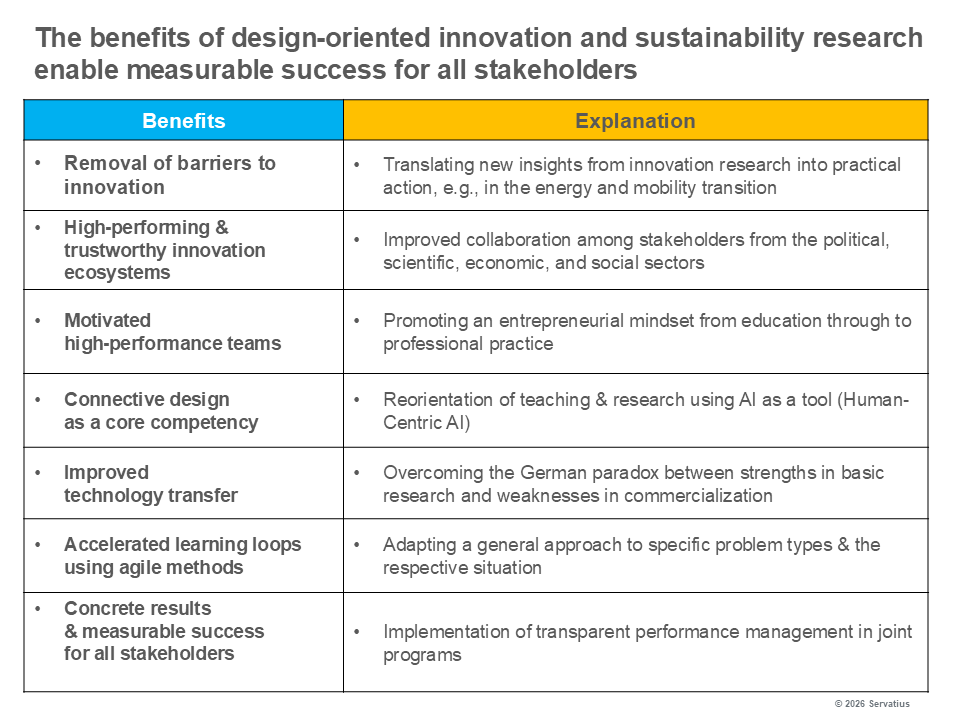
Based on our experience from a series of projects, the following benefits are of particular importance:

  • The removal of barriers to innovation
  • high-performing and trustworthy innovation ecosystems
  • motivated high-performance teams
  • connective design as a core competency
  • improved technology transfer
  • accelerated learning loops using agile methods, as well as
  • concrete results and measurable success for all stakeholders.

These advantages enable a realignment of innovation systems.

Lernprozess Innovationsstrategie

The shortcomings in Germany’s energy and mobility transition are an example of how important it is to remove barriers to innovation.19 The aim here is to translate new insights from innovation research into practical action.

The goal is to design high-performing and trustworthy innovation ecosystems.20 A hallmark of these systems is improved collaboration among stakeholders from the political, scientific, economic, and social sectors.

Motivated high-performance teams play a key role in shaping innovation research.21 Leaders have the task of exemplifying and fostering an entrepreneurial mindset. This begins with education and continues throughout one’s professional career.

A core competency to be developed in this context is connective design.22 This requires a reorientation of teaching and research using AI as a tool. Such human-centric AI permeates all disciplines.

A positive side effect is improved technology transfer.23 The goal here is to overcome the German paradox between strengths in basic research and weaknesses in commercialization.

One way to achieve this is through accelerated learning loops within organizations.24 Agile methods are used for this purpose. It is important to adapt a general approach to specific types of problems and the situation at hand.

In doing so, all stakeholders should focus on concrete results and measurable successes.25 In joint programs, this is achieved through transparent performance management.

In the following, I would like to explain a suitable approach.


Steps of a general procedural concept

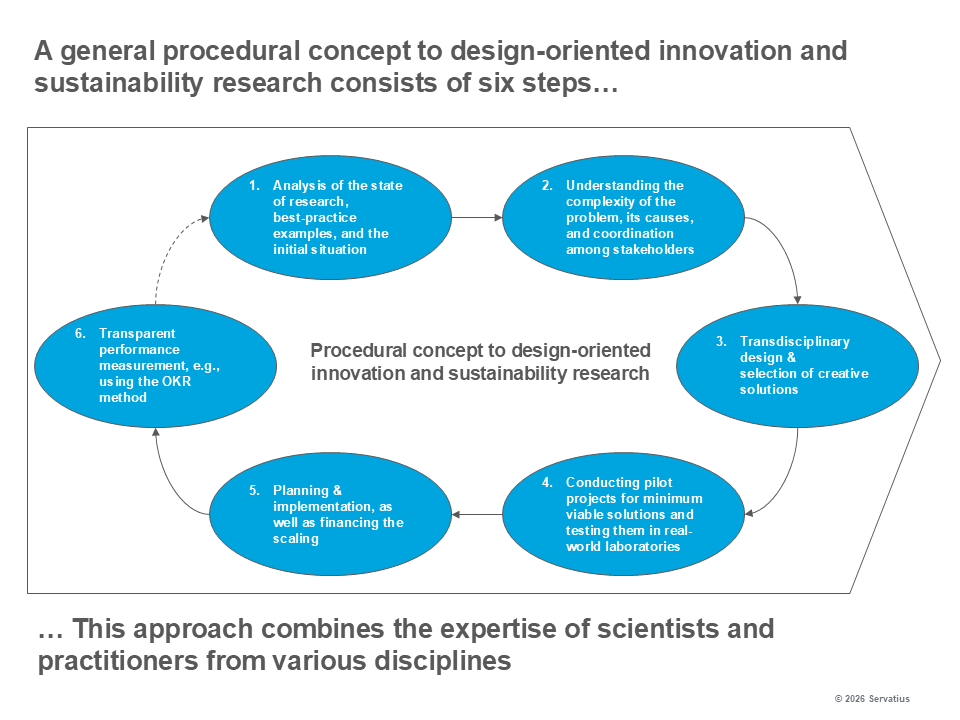
An example of design-oriented innovation and sustainability research is the AI-based strategic and organizational realignment of a company.26 For topics such as this, a general procedural concept consisting of the six steps shown in the figure has proven effective.

Lernprozess Innovationsstrategie

The first step is an analysis of the state of research, best-practice examples, and the specific initial situation. The task here is to combine an internal and an external perspective in an audit.

It is then crucial to develop a comprehensive understanding of the problem’s complexity, to identify its causes, and to coordinate efforts among the relevant stakeholders. Collaboration between various disciplines and practitioners is more successful than disciplinary research approaches.

Transdisciplinary teams also play a key role in the subsequent design and selection of creative solutions. What may be uncharted territory for a single organization can, when taken as a whole, contribute significantly to scientific progress.

A defining characteristic of design-oriented innovation research is the implementation of pilot projects for Minimum Viable Solutions (MVS). These pilots are tested in real-world laboratories of change. For established companies, working in learning loops often requires a shift in mindset. Human resources development can support this effort.

The fifth step is planning and executing the implementation. This is closely linked to financing the scaling process. German startups have long complained of disadvantages, for example, compared to the U.S. Therefore, an improvement in the political framework conditions should be sought, particularly in this step.

In parallel, transparent performance measurement takes place, for example, using the Objectives and Key Results (OKR) method. In this context, “transparent” means that performance management does not occur in sectoral silos. For a policy that sets goals but neglects to measure success, this involves a learning process aimed at joint system design by innovation managers.


Innovation managers design complex, evolutionary systems

As early as in our 2014 book publication “The Innovation Manager,” we concluded that a central task of innovation managers lies in the design of innovation systems and the connection of various fields of action.27 Subsequently, we engaged intensively with the behavioral economic perspective of such connective design.28

The scientific foundation for connective design is the theory of complex, evolutionary systems. The application of this approach to socio-technical systems has triggered a paradigm shift in strategic management.29 U.S. digital companies have mastered this new management paradigm better than the European economy.30

Another insight is that innovation research is a transdisciplinary design task.


Interdisciplinary or transdisciplinary?

We deliberately use the term transdisciplinary to make it clear that, unlike the term interdisciplinary, it is not merely about mediating between scientific disciplines, but also about involving non-scientific actors and establishing a connection between theory and practical design.31 The particular complexity of transdisciplinary innovation research stems from

  • the heterogeneity of the disciplines, which ranges from natural science and technical research through various policy fields to management science and organizational psychology
  • the diverse interests and thought patterns, e.g., of scientists and practitioners
  • the dynamics of development and the number of levels, from geopolitics down to the individual, as well as
  • the different roles of the actors, e.g., as neutral observers or personally affected individuals.

Unfortunately, transdisciplinary innovation research has so far lacked recognition in universities. The reasons for this are manifold. One important reason is likely that the traditional academic and publication system tends to reward disciplinary excellence. This presents an opportunity for applied research.


Transdisciplinary research on sustainability innovations

Our book, published in 1994, on the “ecological reorientation” of automotive companies emerged from consulting projects and accompanying research at the University of Stuttgart.32 This research was transdisciplinary, but had only a limited impact because German companies and policymakers at the time did not implement our recommendations – for example, regarding new propulsion systems.

Thirty years later, this industry – so vital to the German economy – is grappling with serious problems. VW, the world’s second-largest automaker by vehicle sales, is undergoing a process of strategic and organizational realignment.33 At the same time, the geopolitical landscape is marked by extreme uncertainty.

This example illustrates that, when it comes to sustainability innovation, transdisciplinary and design-oriented research is of crucial importance for securing our country’s prosperity. 34 In recent years, the field has evolved dynamically. The intersection of environmental technology and artificial intelligence has moved to the center of attention. New market leaders can emerge from collaborations between established companies and digital greentech startups if European policymakers succeed in improving the framework conditions.35

One example is the German-Luxembourgish startup R3 Robotics, which has developed an AI-powered robotics platform for battery recycling. In this way, Europe can reduce its dependence on imports and increase the sustainability of batteries.36

In my personal experience, students remain very interested in such topics because they recognize the resulting career opportunities. This provides important impetus for our expert network.


Combining management consulting and human resources development with design-oriented innovation and sustainability research

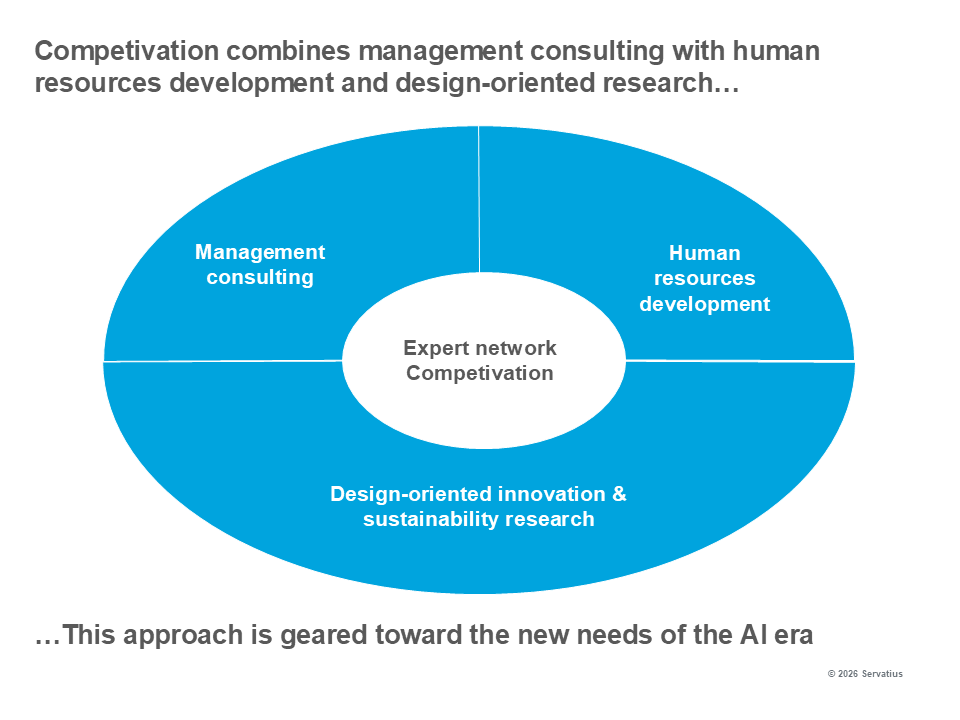
Our expert network Competivation has long combined management consulting and human resources development. The advantage for clients is a better value for money than with traditional consultants, as the focus is on the qualifications of the employees who are actively involved in the projects.

For several years now, we have been supplementing this service with design-oriented innovation and sustainability research. In doing so, we supervise the theses of dual-track students and external doctoral candidates who are working on relevant projects within the client organization. The advantage here is that the research is tailored to the specific situation of the company. The researchers and their companies benefit from the extensive experience of our experts.

Lernprozess Innovationsstrategie

With this approach, Competivation has created a unique international selling point geared toward the needs of the AI era.

Design-oriented research also has far-reaching implications for university teaching. We see ourselves as an innovative educational provider that teaches the ability to a of AI-supported connective design of solutions for complex management problems.37


Conclusion

  • When applying AI, many companies face the challenge of defending their position and gaining competitive advantages through a specific approach
  • In this context, the design of AI ecosystems is crucial
  • Parallel to this development, research approaches and locations are shifting toward design-oriented innovation research in real-world laboratories of change
  • In this context, design-oriented management and innovation research is experiencing a renaissance stemming from a number of advantages
  • In this transdisciplinary research approach, a six-step procedure has proven effective, which is adapted to the respective problem type and situation.
Learning to design solutions for complex management problems

Learning to design solutions for complex management problems

In light of major challenges such as the resilient, digital, and ecological realignment of companies, industries, and regions, the proportion of problem-oriented learning in education and training must increase. The ability to design solutions for complex management problems is crucial for success. Management theory for complex evolutionary systems provides an important foundation for this. The application of this approach, which has developed over the last few decades, has hardly been taught at business schools to date. One practical approach is the DSCMP method, which we have tested in many projects. DSCMP stands for Designing Solutions for Complex Management Problems.


In this new blog post, I explain the theoretical foundations of the DSCMP method and a general framework that can be adapted to specific problem situations.


What students and practitioners find difficult

An exam question that most students find difficult is: Using an example, explain a concept and approach for AI-based strategic realignment. It makes little difference whether the question asks for a digital or ecological realignment. However, designing solutions for complex management problems is not only difficult for students, but also for experienced practitioners in companies. Apparently, neither group is familiar with suitable theoretical foundations or a practical approach that they could apply. I would therefore like to begin by explaining the theory.


Management theory of complex evolutionary systems

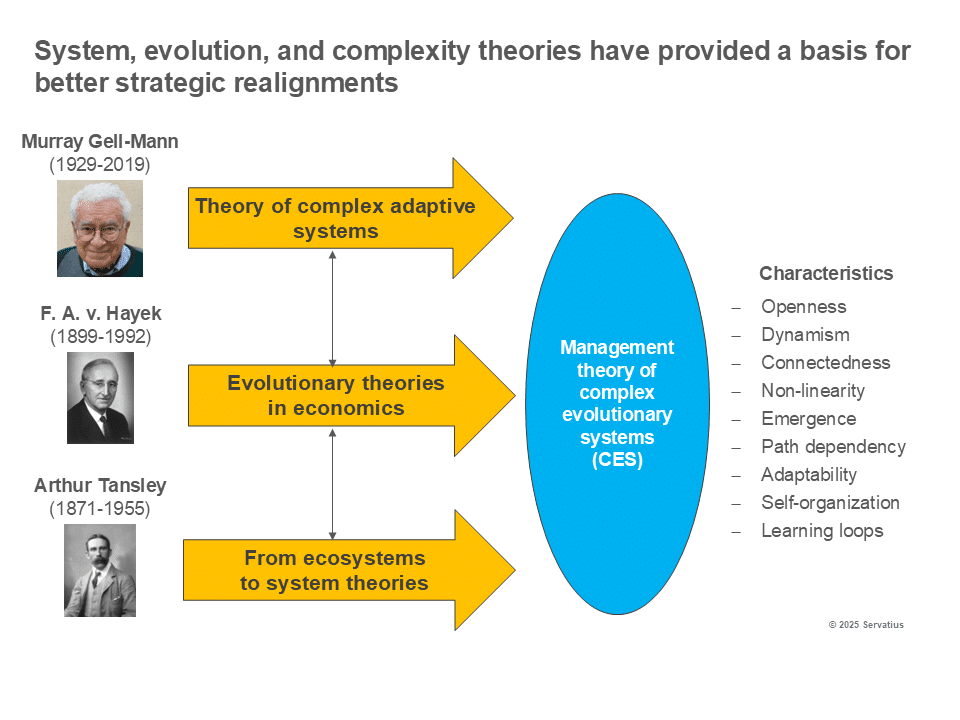
Management theory of complex evolutionary systems has emerged from the combination of three lines of development, the application of which in management enables better strategic realignments.1 These paths, which I outline below, are:

  1. The path from ecosystems to system theories
  2. the application of evolutionary theories in economics, and
  3. a transfer of the theory of complex adaptive systems to the solution of management problems.

The term ecosystem was defined by biologist Arthur Tansley (oikos, the house, and systema, the connected) in 1935, among others. The field of cybernetics, which has been shaped by Norbert Wiener and others since the 1940s, deals with the control of systems. In 1959, Stafford Beer defined the term management cybernetics.2  Since the 1950s, a general systems theory has developed. According to this theory, open systems are in dynamic exchange with their environment. The sociological systems theory founded by Talcott Parsons regards actions as constitutive elements of social systems. In 1951, Parson developed the AGIL scheme (adaptation, goal attainment, integration and latency) for the structural and functional analysis of social systems.3 At the University of St. Gallen, Hans Ulrich has been developing the concept of system-oriented management theory since the 1960s.4 Since the 1990s, the terms economic, stakeholder, start-up, and AI ecosystems have gained importance.

Evolutionary theories (from evolvere, to develop) have a long history in various disciplines. Of particular importance for economics is the concept of spontaneous order developed in the 1960s by Friedrich August von Hayek, who later won the Nobel Prize in Economics (1974).5 This is the result of self-organizing processes that emerge over time and are based on rules that can change. An important basis for the concept of an evolutionary organizational theory of the Munich School around Werner Kirsch6 is the theory of communicative action developed by the philosopher Jürgen Habermas.7 An evolutionary process in management is characterized by a dynamic sequence of imbalances.

The interdisciplinary theory of complex adaptive systems was developed at the Santa Fe Institute in New Mexico (USA), which was co-founded in 1984 by Nobel Prize winner in physics Murray Gell-Mann (1969). Such a system absorbs information about its environment and its own interaction with this environment, recognizes patterns, and condenses them into competing models. The resulting actions feed back into these models. An important management recommendation is to create suitable conditions for more self-organized interaction between competent actors.8 Agile methods are based on this. The theory of complex responsive relationship processes emphasizes the importance of local, nonlinear interactions between actors, which give rise to patterns that are difficult to predict.9

Lernprozess Innovationsstrategie

The theory of complex evolutionary systems has initiated a paradigm shift in strategic management, which has been driven primarily by successful digital companies since the 1990s.10 The characteristics of this management theory, which is new to many established companies, are openness, dynamism, connectedness, non-linearity, emergence, path dependency, adaptivity, self-organization, and learning loops.

The question now is how this theoretical foundation can help teachers and learners in practice to design solutions for complex management problems.


Approach using the DSCMP method

The DSCMP method was developed as part of our consulting, teaching, and research activities. Consultants are usually called in when organizations are looking for support in solving complex management problems. However, consulting only leads to lasting success if managers and employees are successfully taught the relevant skills.

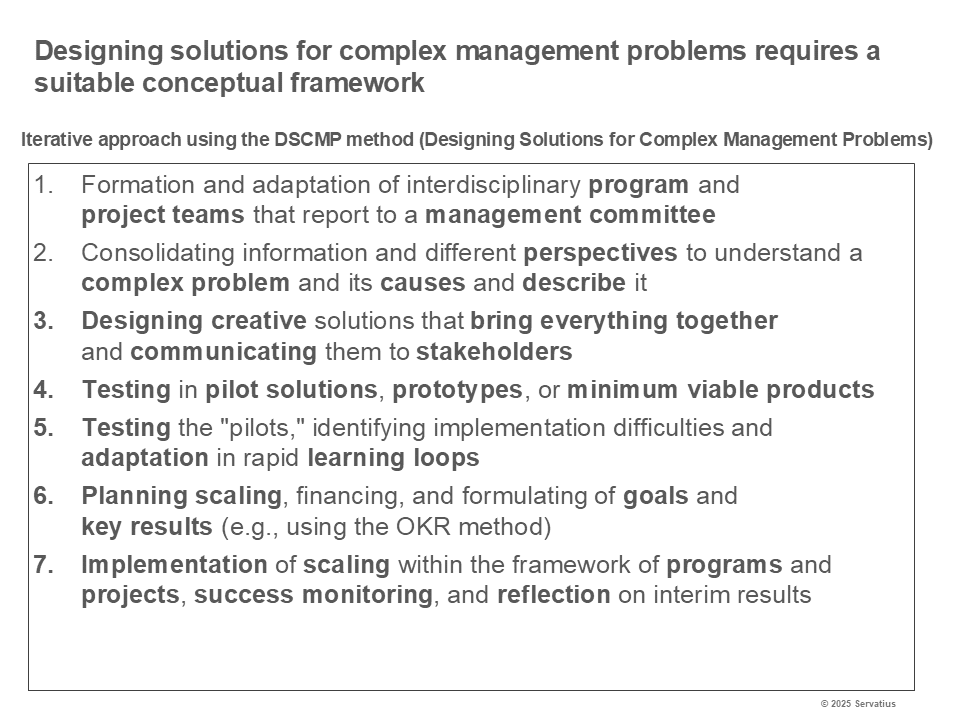
Designing solutions for complex management problems requires a conceptual framework that project teams can adapt to the situation at hand. The following figure shows the main phases of the iterative process used in the DSCMP method. The didactic challenge lies in teaching the ability to adapt this approach to new complex problems.

Lernprozess Innovationsstrategie

In the DSCMP method, the first phase involves forming interdisciplinary program and project teams that report to a management committee. The structure and composition of these teams may change as the work progresses.

In phase 2, the task is to bring together relevant information and different perspectives. The goal is to understand a complex problem and its causes and describe it as accurately as possible.

This is followed by the important step of designing creative solutions that bring everything together. Examples include the development of a hydrogen value chain and the conversion to climate-resilient cities. Communication with stakeholders from politics, science, and society is becoming increasingly important but is difficult to implement.11 Such cooperation requires dialogue-based action based on a position of strength, e.g., with the help of new methods such as connective design.

Depending on the type of problem, possible approaches can be tested in pilot solutions, prototypes, or minimum viable products.

A variety of methods have been developed for testing the „pilots.“ It is also important to identify implementation difficulties and adapt the solutions in rapid learning loops.

The implementation of a promising solution begins with planning the scaling and further financing. The Objectives and Key Results (OKR) method has proven useful for formulating goals and key results.

The final phase is then the implementation of scaling within the framework of programs and projects, a review of success, and regular reflection on interim results.

The success of such an approach depends crucially on the skills and mindset of the teams and managers involved.


Implications for management education

Important implications for management education can be summarized in three points:12

  1. Learning from complex current problems
  2. interdisciplinary work on these problems in projects
  3. the use of teachers with leadership experience.

The reality at most universities is far from this. However, this opens up a wide range of opportunities for innovative education providers. In our practical work, we use the DSCMP method in bachelor’s and master’s degree programs as well as directly in companies as part of customized management education. One focus of our research is on supporting problem-oriented project-based learning through artificial intelligence (AI). The benefit for all learners lies in improving their chances in a labor market that is currently undergoing dramatic change.


Artificial intelligence (AI) is changing the world of work

Dario Amodei, founder of the AI start-up Anthropic, predicts that AI will destroy half of all entry-level office jobs. Classic clerical work, which is characterized by repetitive, analytical, and administrative tasks, will be particularly affected. This makes it all the more important for job seekers to be able to demonstrate AI skills. Past experience with digitalization shows that jobs tend to change rather than disappear completely. It is therefore important to first learn how to use AI to perform time-consuming tasks more productively, thereby gaining more time to solve complex problems. In training and continuing education on the path to becoming a manager, the use of AI to manage complexity is crucial for success.13


Conclusion

  • Strategic realignments require a suitable theoretical foundation, innovative approaches, and problem-oriented learning
  • One such foundation is the management theory of complex evolutionary systems
  • A creative phase in the Designing Solutions for Complex Management Problems (DSCMP) approach is the connecting design
  • Innovative education providers play an important role in applying these foundations and approaches within the framework of problem-oriented learning.


Literature

[1] Servatius, H.G., Triple Strategic Realignment. In: Competivation Blog, June 7, 2024

[2] Beer, S., Cybernetics and Management, English Universities Press 1959

[3] Parsons, T., The Social System, The Free Press 1951

[4] Ulrich, H., The Enterprise as a Productive Social System, Haupt 1968

[5] von Hayek, F.A., The Constitution of Liberty, University of Chicago Press 1960

[6] Kirsch, W., Seidel, D., van Aaken, D., Evolutionary Organization Theory, Schäffer-Poeschel 2010

[7] Habermas, J., Theory of Communicative Action (2 volumes), Suhrkamp 1984

[8] Gell-Mann, M., The Quark and the Jaguar: From the Simple to the Complex, Piper 1994, p. 53

[9] Stacey, R.D., Complex Responsive Processes in Organizations – Learning and Knowledge Creation, Routledge 2001

[10] Servatius, H.G., Learning from Successful Digital Companies. In: Competivation Blog, July 12, 2024

[11] Servatius, H.G., Designing Innovative Stakeholder Ecosystems. In: Competivation Blog, January 10, 2023

[12] Servatius, H.G., AI and the Future of Management Education. In: Competivation Blog, April 9, 2025

[13] Knees, L., Maier-Brost, H., How secure is my job from AI? In: Handelsblatt, July 4/5/6, 2025, pp. 54-55

Interessiert?

CONNECTIVE MANAGEMENT

Vereinbaren Sie einen unverbindlichen Gesprächstermin:


    +49 (0)211 454 3731